
cut short and limed edges of the hair was for high alii wahine as well as court dancers!
(1) The chief’s sacred position. The chief was said to possess mana; for events in his sphere were regarded to be apart from the order of ordinary happenings. Mana referred to a manifestation of the mysterious, supernatural power that allegedly belonged to the ruling class. Commoners could not get too close to the chief, nor could they touch his possessions, walk in his footsteps or let their shadows fall on the palace grounds. A close proximity with commoners was thought to drain away the mana from a high chief (Kane 1997:34). If the ruling chief went forth from his compound during the daytime, a wohi chief,– who was exempt from the prostration taboo–, went before him with a kapu stick (a tapa-covered ball on a stick), calling out “kapu moe!” This would warn the people to prostrate themselves before the arriving sovereign (of the ni‘aupi‘o class). When traveling with his warrior-guardians, a chief not fond of walking, would be carried on a litter, called a manele. The march frequently would be heralded by the sound of music from the nose flute, drum, and other instruments. A commoner, or chief, was never to allow his head to be above that of a higher-ranking personage. This meant that one must crawl into the presence of a sitting paramount ruler of high pedigree (Day 1986:282; Kanahele 1992:196-197; Hooper 1985:106). In formal appearances to the public, the king would be introduced by a mele inoa, a genealogical name-chant, indicating his distinguished lineage.
(2) Paying tribute (ho’okupu). State propaganda taught that it was through the sovereign that the gods ensured good crops, the well-being of the people, and the prevention of disasters, such as droughts and famine (Kuykendall 1928:45). As an act of reciprocity for this beneficence, an elaborate ho’okupu ceremony of bringing gifts to the ruler would take place. Accompanied by sonorous chanting, leis heavy with fresh blossoms would be brought for the palace personnel, while handicrafts and gifts of many kinds would be laid out before the feet of the sovereign and his immediate entourage (Kanahele 1992:89-90; Mellen 1952:113-114).
(references to the Kapu moe. the 23 lineds of Kauai alii mo'i could not be possible without the 23 sACRED CHEIFESSES THEY WERE JOINED TO!!
Hawaiian Heritage and Lore by Dr. Waterhouse |

Bible Symbols
Symbols in the Bible coming soon. Please bookmark and check back. Thank You for your patience.

The Importance of Hawaiian Heritage and Lore
Unlike cultures that were continually effected by intrusive outsiders, the remote and isolated civilization of ancient Hawai’i long remained serenely unaffected from foreign-outsider influences. Consequently, a study of her customs, that remained relatively constant for thousands of years, is like opening a window into an age markedly different from our own. The present study on “Hawaiian Heritage,” aims at providing an opportunity to understand a civilization whose roots lie uniquely in a far distant past. This makes for fascinating study! But there also is a broadening value gained when delving into the culture of ancient Hawai’i, as the following points bear out:
 (1) The value in learning about another, differing life-style, not only results in enlarging one’s comprehension of the world, but in understanding what lies beyond one’s narrow personal experience. Indeed, to be a cultured person is, by definition, to become acquainted with a culture other than one’s own.
(2) We live in days which demand good judgment; — and good judgment rests against the knowledge of the cultural background of the past. Being aware of a vanishing past causes the immediate foreground of today’s world-scene to stand out in contrasting bold relief. A long-range impression provides a perspective to our sense of the rapid changes that have all too quickly over-taken our island world. To know our prehistory is as significant as the events of early childhood are to the understanding of the grown adult.
(3) The fact that vestiges of Hawaiian cultural practices, concepts and beliefs continue to exist, calls not only for an acquaintance with island ways but,–as residents of Hawai’i nei–, enables one to serve as a bridge linking Hawai’i’s past to her modern present.
Hawai'i's Keiki in 1837
(2) We live in days which demand good judgment; — and good judgment rests against the knowledge of the cultural background of the past. Being aware of a vanishing past causes the immediate foreground of today’s world-scene to stand out in contrasting bold relief. A long-range impression provides a perspective to our sense of the rapid changes that have all too quickly over-taken our island world. To know our prehistory is as significant as the events of early childhood are to the understanding of the grown adult.
(3) The fact that vestiges of Hawaiian cultural practices, concepts and beliefs continue to exist, calls not only for an acquaintance with island ways but,–as residents of Hawai’i nei–, enables one to serve as a bridge linking Hawai’i’s past to her modern present.
Categories: Preface Leave a comment
Hawai’i – The World’s most Isolated Island Group
Located some 2,400 miles west of California, the eight major islands of the main Hawaiian group (Kaua’i, Ni’ihau, O’ahu, Maui, Moloka’i, Lana’i Kaho’olawe, and Hawai’i) lie in the tropics of the central Pacific, forming an almost straight line for 400 miles from northwest to southeast. All are volcanic in origin, having been thrust up from the deep floor of the ocean. Born in volcanic fires, the oceanic Hawaiian Ridge is numbered among the most massive mountains on earth. The highest eminence is the summit of Mauna Kea, 13,784 feet high. The volcanic action creating the group began at the northwest, where the swamp-filled crater of Waialeale on Kaua’i is considered the wettest spot on earth. Lava flows still in progress at the other end of the chain, continues the up building on the island of Hawai’i. When compared to the other larger island groups on earth, the Hawaiian archipelago is geographically the most distantly isolated from the continents by more than 2,000 miles.
Categories: Prologue Leave a comment
Discovery of the Sandwich Islands

Ships off of Maui in 1786
Categories: Prologue Leave a comment
How Hawai’i was First Settled
(1) Origins. It was in Tonga and Samoa that the language and culture, we now call Polynesian, was developed. From that cradle in the Tonga-Samoa region, Polynesian culture began its spread over the Pacific about the time of Christ. In 1769 the British explorer, Captain Cook, met Tupaia, a Tahitian chief and navigator who had a considerable knowledge of the surrounding islands. He referred to “O-Heavai” (Cook’s quaint orthography for “Havai‘i”), as a place much larger than Tahiti, and called “the father of all islands.” The reference most likely was to Savai’i, the largest island within the Samoa group. This deduction is based on Tupaia’s association of “Oheavai” as lying near “Ouporroo;”– the two names being the Tahitian dialectal equivalents of the neighboring islands of Savai’i and Upolu (Sharp 1957:104-105). “Savai’i” or “Savaiki” are often substituted for “Samoa” in the Rotuma myths;– these names being cognate forms for “Hawaiki,” the generic Polynesian “homeland” (Hooper 1985:74; Lewis 1994:343-346). An ancient Raiatean chant described “Havai’i” as the “birth-place of lands” (Sharp 1957:104-105). In the colonization process, the name Havai’i was bestowed on an island near Tahiti (later known as Ra’iatea) and on Hawai’i (Kane 1997:13). “Linguistic and archaeological evidence has confirmed Samoa as the place of origin of the eastern Polynesians” (Lewis 1994:346). In this connection it is interesting to observe that Tonga, lying to the south of Samoa, means “leeward-side,” while the islands named Tokelau, toward the north, carries the meaning “windward-side.” This suggest that the central point, where colonization of outlying lands was launched, was indeed Samoa!
When Europeans arrived into the Pacific, they found that the Polynesians had preceded them, occupying a vast triangle that covers almost a fourth of the Pacific;–an area more than four times as large as the United States. These seafaring, indigenous people, had discovered and colonized not only Tahiti, Hawai’i, New Zealand, and tiny Easter Island, but all the islands in this vast sea, which covers more than 10 million square miles. This means virtually every speck of habitable land, hundreds of islands and atolls in all. This feat by Polynesian sea-rovers is considered one of humanity’s greatest achievements (Smith 2008:123). Long before Columbus’s discovery of America, or Magellan’s first circumnavigation of the globe, indigenous seafarers were going forth on wide-ranging explorations. It is remarkable that though more widely dispersed than anyone, the Polynesians retained among themselves an extraordinary uniformity of language and custom. “The Hawaiian language bears a close resemblance to Tahitian, Samoan, Tongan, and New Zealand Maori words, indicating a common homeland for eastern and western Polynesian groups. The Hawaiians’ physical features, their traditions, and the names of their deities and places are similar to those of the Tahitians, and artifacts such as fishhooks, adzes, and ornaments closely resemble those of central Polynesia” (Nordyke 1989:7).
 (2) Discovery of the Pacific.
(3) Two separate waves of immigration. From Tonga settlers moved nearly 1,800 miles directly to the Marquesas group. From there they later dispersed to Hawai’i and to Tahiti (Kane 1997:11; Lewis 1994:348; Suggs 1965:209). As suggested by both archaeological and linguistic evidence, the immediate homeland of the first, earliest wave of Polynesian voyagers who colonized Hawai’i evidently was from the Marquesas (an island group a little less that 2,000 miles to the southeast of Hawai‘i). The discovery of the Hawaiian Islands by large double-hulled voyaging canoes (tied together with spreader frames on which platforms were constructed) was a remarkable achievement of navigators who had no modern compass to guide them. Current archaeological data indicate that these first settlers arrived around A.D. 400, or earlier. Centuries later, beginning during the 11th through the 14th centuries (Cordy 2000:143-144), a second wave of immigrants arrived from the leeward Tahitian islands of Ra’iatea, Bora-Bora and Huahine (some 2,200 miles to the south). The theory has been put forth that: “The later migration was a time of many voyages; well-organized expeditions under the leadership of chiefs with priests functioning as navigators” (LeDoux 1990:58). A differing, more recent point of view, is offered by Dr. Ross Cordy, who makes the observation that “the Hawaiian accounts never specifically note any more than a few foreigners arriving, and certainly not canoe loads or fleets of them” (Cordy 2000:146). Be that as it may, the two Polynesian groups (the earlier from the Marquesas; the later from the Tahitian archipelago) melded to produce the unique indigenous civilization of Hawai’i.
(4) The animals brought by the double voyaging canoe. Two months without landfall was the limit of time that the Polynesian voyagers could provide for themselves a fair supply of food and water. Taken with them on a far journey were breeding populations of the domestic pig, dog, and jungle fowl (chicken). On the journey the animals were kept alive mainly on coconut meat and water from old nuts. All were originally of southeast Asian ancestry. Along with the others, the rat, the louse and three types of geckos (lizards) arrived in Hawai’i, not as a bonafide passengers, but as a stowaways (Emory 1964:46-48). Besides the Polynesian rat, pig and dog, the only other early-arrival land-mammals were two species of bats that successfully colonized the Hawaiian Islands without human assistance (Juvik 1998:131).
(5) The archaeological evidence. A basalt adze found in the Tuamotu archipelago by a Bishop Museum expedition turns out to have come from the Hawaiian island of Kaho’olawe. This discovery scientifically establishes the truth of ancient Hawaiian traditions which told of navigating without charts or instruments, and of making round trips between Hawai’i and Tahiti. The prehistoric adze, found on the island of Napuka in the 1930’s, was examined in 2007 at the University of Queensland in Australia, where new technology was available. The adze was found to bear the unmistakable geo-chemical signature of basalt from Kaho’olawe. This provides hard evidence that the original Hawaiian settlers were not washed ashore accidentally on these islands. The conclusion may safely be drawn that they were able to make the return trip from Hawai’i to the Tuamotus and the Society Islands;–a distance of 2,500 miles. And then come back,–as reported in oral traditions–, on large voyaging canoes (Borg 2007).
(6) The Marquesas Kaua‘i link. Outstanding peculiarities in the subculture of the inhabitants of the island of Kaua’i indicate that the island was a backwater, preserving many features of the first Marquesan wave of settlers. Used only on Kaua’i were stone pounders with a stirrup-like configuration differing markedly from the classical, Hawaiian knobbed, pestle poi-pounder, found elsewhere in the archipelago. In particular support of the Kaua’i-Marquesan link is the archaeological discovery that the distinctive stirrup-type poi pounder also was in use in the northern Marquesas (Conrow 2001:51). Idiosyncrasies peculiar to Kaua’i (and neighboring Ni’ihau) included the use of the treadle board (papa hehi) in the hulas; decorating gourd calabashes with geometric designs (the ipu pawehe); and the employment of a unique type of tattoo needle. The differences between the speech of Kaua’i and the other Hawaiian islands continued to be noticeable as late as the 1870’s. The Kaua’i subdialect was noted for preserving the t and r sounds, while having the h sound substituted by a glottal stop (a sound-break, as in English oh-oh). Because of the island’s extraordinary conservatism, the inhabitants of the other islands looked upon Kaua’i as the cradle of knowledge, skill, laws, and religion (Emory 1959:64-65; Fornander 1919:244).
(7) The South American connection. There is evidence of a Polynesian presence on the east coast of Australia, and that these sea-rovers even had a connection with far away Madagascar (Lewis 1974:771; Herrmann 1954:190). But the archaeological evidence that goods flowed both ways between Polynesia and South America is of a striking nature. Long before the first Europeans arrived in the Pacific two American plants, the sweet potato and the bottle gourd had been imported to the Hawaiian Islands. The sweet potato. In the Quechua dialect of north Peru, the sweet potato,– comprising a part of the native fauna of South America –, is called kumar, while in Polynesia its name is kumara (pronounced ’uwala in Hawaiian). It turns out that there is a variety of linguistic correspondences between north Peru and Oceania. Such eastern Polynesian words as hapai (“to carry”), kiri (“skin”), toki (“adze”), and ariki (“chief”) also are found incorporated within the dialect of north Peru (to wit: apay, kiri, toki, and awki)! Kon-Tiki, the Peruvian god, also is worshiped in Polynesia as Kane tiki. It needs to be added that the Polynesian language family has no affinity to the spoken languages of the Americas, but rather is related to the tongues of Malaysia and Indonesia. Seemingly, the agent for the arrival of the sweet potato, to the islands of the Pacific, were the far-ranging Polynesian sea-farers. The gourd (ipu). The bottle gourd is an indigenous plant of the primeval American forest; the shells of which make excellent water-containers. Both Polynesian fishermen and coastal Indians of Peru have put them to this use for centuries. Since no type of gourd can survive alive in salt water, even for a short time, the gourds distributed throughout Polynesia can have reached the Hawaiian Islands only in vessels navigated by man (Herrmann 1954:200-202). A crucial bone discovery. Conclusive evidence that the Polynesians ultimately reached the Americas is to be found in chicken bones that in 2007 was dug up from an archaeological site on Chile’s Arauco Peninsula. The South American chicken remains,–dating from the 1300s–, were found to be genetically nearly identical to those in Hawai’i and other Pacific islands (Smith 2008:123; TenBruggencate 2007:A1, A5). Conclusion. The fact that sweet potatoes, found throughout the South Seas, came from the northern part of South America, and that the southern part of the same continent had been the recipient of Polynesian chickens, strongly suggests that there were multiple transfers made by the double canoes of the so-called “Vikings of the Pacific.” It may be added that a number of Polynesian artifacts have been discovered on the coast of South America. Stone adzes of indubitable Polynesian type (referred to in the native dialect by their Polynesian name toki) were picked up on the surface in Chile. And a Maori fighting club (a New Zealand patu-patu) was dug up from a South American Indian site (Suggs 1960:209).
(8) The legendary evidence of sea-rovers. Epic Polynesian voyages that date during the 14th to 16th centuries, were remembered in Hawaiian oral traditions and chants. An observation of an early navigator of that time (as handed-down orally in a chant) proclaimed that “the people of Hawai’i are the offspring of Tahiti” (Buck 1959:246). Truth in such an assertion is found in the name of a point of land off the western end of the island of Kaho’olawe. For the cape,– pointing ancient voyagers on a southward sailing course–, is called Ke-ala-i-Kahiki, “The pathway to Tahiti.” Individual islands of the South Seas are mentioned in old Hawaiian chants –such as Polapola and Upolu (a reference to Bora Bora and Taha’a in the Society group). Of more striking significance is the fact that the names of early Hawaiian sea-rovers are not only remembered in the chants, but are also remembered in the oral traditions of South Sea islanders who lived far distant from Hawai‘i’s shores. Two examples may be given. Lu‘ukia, a resident of Waipi’o Valley and wife of the high chief ’Olopana is said to have retired to “Kahiki.” In Hawai’i she was famed for inventing an intricate knotting of braided sennit. The special weaved-braid was used not only for a chastity belt, but also as a network cover for water gourds. Called “the skirt of Lu‘ukia” (“pa’u o Lu’ukia”), the weave was “later memorialized [as a part of every-day speech] as the name of an extremely complicated sennit lashing by which the hulls of Hawaiian double canoes were fastened to connecting cross-beams” (Kane 1991:63). A very inventive woman, Lu’ukia also is celebrated for the introduction of a bark-cloth skirt of five thicknesses In the Maori traditions of distant New Zealand, Lu’ukia’s unique skirt became famous and is given due honor. “Be ye girded with the mat of Rukutia,” says an ancient Maori chant (Beckwith 1989:360-361). That this is the same woman, whose name became incorporated into the Hawaiian language, unmistakably is made evident by the fact that the Maoris also knew that her husband’s name was Koropanga. Those familiar with Polynesian linguistics will readily recognize that Maori “Rukutia” and “Koropanga” are cognate equivalents to Hawaiian “Lu‘ukia and ‘Olopana.” Kaha’i, born both to rank and with a precocious talent to learn the complex skills of navigation, has long been a famous hero in the Hawaiian archipelago. For he was the sea-rover who introduced a species of breadfruit (artocarpus incisa) that he transported to Hawai’i from the remote South Pacific (Kane 1991:64). Since this species is propagated only through suckers and not through seeds, it must have been brought to Hawai’i by a human carrier (Brown 2006:16). According to oral tradition, Kaha’i planted breadfruit trees in two localities;– in Haki-pu‘u, O’ahu, and at Pu’uloa, Kohala, Hawai’i (Beckwith 1989:97; Fornander 1919:304, note 175; Kane 1991:64). In the dialects of southern Polynesia, the famed navigator is recalled by the Tuamotuans and also by the islanders of Mangareva as “Tahaki” (Luomala 1955:139). The Maoris knew his name as “Tawhaki,” while in Tahiti he is remembered as “Tafa’i.” In all cases mentioned,– whether he was known as Kaha’i, Tahaki, Tawhaki, or Tafa’i, the wide-ranging voyager’s identity invariably is pin-pointed as the son of Hema (Beckwith 1989:238-240, 248; Luomala 1955:151-152). The cognate differences. Why did the Hawaiians say “Kaha’i,” instead of “Tahaki?“ When in 1926, the Hawaiian alphabet was established by American missionaries, the k was chosen to replace the t (a decision based on native usage that had begun in Kona and then had spread westward). Meanwhile, in the pre-discovery Hawaiian dialect, the original South Seas k had been replaced (as in Tahitian) by the glottal stop (called the ’okina) (Buck 1959:249). Question of dates: The voyaging by skilled navigators to and from “the borders of Kahiki,” –Kahiki meaning foreign lands–, is dated by counting back the generations in Hawaiian chants that are rooted in historical legend and religious myth. Accepting 20 years per generation, ’Olopana is thought to have ruled as a chief in Hawai’i from A.D. 1340-1360 (Cordy 2000:141). Kaha’i, and his exploits, came two generations later; for he was the grandson of ’Olopana’s brother Mo’ikeha (Kane 1991:63-64). Seemingly, the 14th through 16th centuries constituted the time-span when there were Polynesian seafarers who made long voyages between Hawai’i and the distant South Pacific islands (Kanahele 1979:288).
When Europeans arrived into the Pacific, they found that the Polynesians had preceded them, occupying a vast triangle that covers almost a fourth of the Pacific;–an area more than four times as large as the United States. These seafaring, indigenous people, had discovered and colonized not only Tahiti, Hawai’i, New Zealand, and tiny Easter Island, but all the islands in this vast sea, which covers more than 10 million square miles. This means virtually every speck of habitable land, hundreds of islands and atolls in all. This feat by Polynesian sea-rovers is considered one of humanity’s greatest achievements (Smith 2008:123). Long before Columbus’s discovery of America, or Magellan’s first circumnavigation of the globe, indigenous seafarers were going forth on wide-ranging explorations. It is remarkable that though more widely dispersed than anyone, the Polynesians retained among themselves an extraordinary uniformity of language and custom. “The Hawaiian language bears a close resemblance to Tahitian, Samoan, Tongan, and New Zealand Maori words, indicating a common homeland for eastern and western Polynesian groups. The Hawaiians’ physical features, their traditions, and the names of their deities and places are similar to those of the Tahitians, and artifacts such as fishhooks, adzes, and ornaments closely resemble those of central Polynesia” (Nordyke 1989:7).
Mooka 1778
(3) Two separate waves of immigration. From Tonga settlers moved nearly 1,800 miles directly to the Marquesas group. From there they later dispersed to Hawai’i and to Tahiti (Kane 1997:11; Lewis 1994:348; Suggs 1965:209). As suggested by both archaeological and linguistic evidence, the immediate homeland of the first, earliest wave of Polynesian voyagers who colonized Hawai’i evidently was from the Marquesas (an island group a little less that 2,000 miles to the southeast of Hawai‘i). The discovery of the Hawaiian Islands by large double-hulled voyaging canoes (tied together with spreader frames on which platforms were constructed) was a remarkable achievement of navigators who had no modern compass to guide them. Current archaeological data indicate that these first settlers arrived around A.D. 400, or earlier. Centuries later, beginning during the 11th through the 14th centuries (Cordy 2000:143-144), a second wave of immigrants arrived from the leeward Tahitian islands of Ra’iatea, Bora-Bora and Huahine (some 2,200 miles to the south). The theory has been put forth that: “The later migration was a time of many voyages; well-organized expeditions under the leadership of chiefs with priests functioning as navigators” (LeDoux 1990:58). A differing, more recent point of view, is offered by Dr. Ross Cordy, who makes the observation that “the Hawaiian accounts never specifically note any more than a few foreigners arriving, and certainly not canoe loads or fleets of them” (Cordy 2000:146). Be that as it may, the two Polynesian groups (the earlier from the Marquesas; the later from the Tahitian archipelago) melded to produce the unique indigenous civilization of Hawai’i.
(4) The animals brought by the double voyaging canoe. Two months without landfall was the limit of time that the Polynesian voyagers could provide for themselves a fair supply of food and water. Taken with them on a far journey were breeding populations of the domestic pig, dog, and jungle fowl (chicken). On the journey the animals were kept alive mainly on coconut meat and water from old nuts. All were originally of southeast Asian ancestry. Along with the others, the rat, the louse and three types of geckos (lizards) arrived in Hawai’i, not as a bonafide passengers, but as a stowaways (Emory 1964:46-48). Besides the Polynesian rat, pig and dog, the only other early-arrival land-mammals were two species of bats that successfully colonized the Hawaiian Islands without human assistance (Juvik 1998:131).
(5) The archaeological evidence. A basalt adze found in the Tuamotu archipelago by a Bishop Museum expedition turns out to have come from the Hawaiian island of Kaho’olawe. This discovery scientifically establishes the truth of ancient Hawaiian traditions which told of navigating without charts or instruments, and of making round trips between Hawai’i and Tahiti. The prehistoric adze, found on the island of Napuka in the 1930’s, was examined in 2007 at the University of Queensland in Australia, where new technology was available. The adze was found to bear the unmistakable geo-chemical signature of basalt from Kaho’olawe. This provides hard evidence that the original Hawaiian settlers were not washed ashore accidentally on these islands. The conclusion may safely be drawn that they were able to make the return trip from Hawai’i to the Tuamotus and the Society Islands;–a distance of 2,500 miles. And then come back,–as reported in oral traditions–, on large voyaging canoes (Borg 2007).
(6) The Marquesas Kaua‘i link. Outstanding peculiarities in the subculture of the inhabitants of the island of Kaua’i indicate that the island was a backwater, preserving many features of the first Marquesan wave of settlers. Used only on Kaua’i were stone pounders with a stirrup-like configuration differing markedly from the classical, Hawaiian knobbed, pestle poi-pounder, found elsewhere in the archipelago. In particular support of the Kaua’i-Marquesan link is the archaeological discovery that the distinctive stirrup-type poi pounder also was in use in the northern Marquesas (Conrow 2001:51). Idiosyncrasies peculiar to Kaua’i (and neighboring Ni’ihau) included the use of the treadle board (papa hehi) in the hulas; decorating gourd calabashes with geometric designs (the ipu pawehe); and the employment of a unique type of tattoo needle. The differences between the speech of Kaua’i and the other Hawaiian islands continued to be noticeable as late as the 1870’s. The Kaua’i subdialect was noted for preserving the t and r sounds, while having the h sound substituted by a glottal stop (a sound-break, as in English oh-oh). Because of the island’s extraordinary conservatism, the inhabitants of the other islands looked upon Kaua’i as the cradle of knowledge, skill, laws, and religion (Emory 1959:64-65; Fornander 1919:244).
(7) The South American connection. There is evidence of a Polynesian presence on the east coast of Australia, and that these sea-rovers even had a connection with far away Madagascar (Lewis 1974:771; Herrmann 1954:190). But the archaeological evidence that goods flowed both ways between Polynesia and South America is of a striking nature. Long before the first Europeans arrived in the Pacific two American plants, the sweet potato and the bottle gourd had been imported to the Hawaiian Islands. The sweet potato. In the Quechua dialect of north Peru, the sweet potato,– comprising a part of the native fauna of South America –, is called kumar, while in Polynesia its name is kumara (pronounced ’uwala in Hawaiian). It turns out that there is a variety of linguistic correspondences between north Peru and Oceania. Such eastern Polynesian words as hapai (“to carry”), kiri (“skin”), toki (“adze”), and ariki (“chief”) also are found incorporated within the dialect of north Peru (to wit: apay, kiri, toki, and awki)! Kon-Tiki, the Peruvian god, also is worshiped in Polynesia as Kane tiki. It needs to be added that the Polynesian language family has no affinity to the spoken languages of the Americas, but rather is related to the tongues of Malaysia and Indonesia. Seemingly, the agent for the arrival of the sweet potato, to the islands of the Pacific, were the far-ranging Polynesian sea-farers. The gourd (ipu). The bottle gourd is an indigenous plant of the primeval American forest; the shells of which make excellent water-containers. Both Polynesian fishermen and coastal Indians of Peru have put them to this use for centuries. Since no type of gourd can survive alive in salt water, even for a short time, the gourds distributed throughout Polynesia can have reached the Hawaiian Islands only in vessels navigated by man (Herrmann 1954:200-202). A crucial bone discovery. Conclusive evidence that the Polynesians ultimately reached the Americas is to be found in chicken bones that in 2007 was dug up from an archaeological site on Chile’s Arauco Peninsula. The South American chicken remains,–dating from the 1300s–, were found to be genetically nearly identical to those in Hawai’i and other Pacific islands (Smith 2008:123; TenBruggencate 2007:A1, A5). Conclusion. The fact that sweet potatoes, found throughout the South Seas, came from the northern part of South America, and that the southern part of the same continent had been the recipient of Polynesian chickens, strongly suggests that there were multiple transfers made by the double canoes of the so-called “Vikings of the Pacific.” It may be added that a number of Polynesian artifacts have been discovered on the coast of South America. Stone adzes of indubitable Polynesian type (referred to in the native dialect by their Polynesian name toki) were picked up on the surface in Chile. And a Maori fighting club (a New Zealand patu-patu) was dug up from a South American Indian site (Suggs 1960:209).
(8) The legendary evidence of sea-rovers. Epic Polynesian voyages that date during the 14th to 16th centuries, were remembered in Hawaiian oral traditions and chants. An observation of an early navigator of that time (as handed-down orally in a chant) proclaimed that “the people of Hawai’i are the offspring of Tahiti” (Buck 1959:246). Truth in such an assertion is found in the name of a point of land off the western end of the island of Kaho’olawe. For the cape,– pointing ancient voyagers on a southward sailing course–, is called Ke-ala-i-Kahiki, “The pathway to Tahiti.” Individual islands of the South Seas are mentioned in old Hawaiian chants –such as Polapola and Upolu (a reference to Bora Bora and Taha’a in the Society group). Of more striking significance is the fact that the names of early Hawaiian sea-rovers are not only remembered in the chants, but are also remembered in the oral traditions of South Sea islanders who lived far distant from Hawai‘i’s shores. Two examples may be given. Lu‘ukia, a resident of Waipi’o Valley and wife of the high chief ’Olopana is said to have retired to “Kahiki.” In Hawai’i she was famed for inventing an intricate knotting of braided sennit. The special weaved-braid was used not only for a chastity belt, but also as a network cover for water gourds. Called “the skirt of Lu‘ukia” (“pa’u o Lu’ukia”), the weave was “later memorialized [as a part of every-day speech] as the name of an extremely complicated sennit lashing by which the hulls of Hawaiian double canoes were fastened to connecting cross-beams” (Kane 1991:63). A very inventive woman, Lu’ukia also is celebrated for the introduction of a bark-cloth skirt of five thicknesses In the Maori traditions of distant New Zealand, Lu’ukia’s unique skirt became famous and is given due honor. “Be ye girded with the mat of Rukutia,” says an ancient Maori chant (Beckwith 1989:360-361). That this is the same woman, whose name became incorporated into the Hawaiian language, unmistakably is made evident by the fact that the Maoris also knew that her husband’s name was Koropanga. Those familiar with Polynesian linguistics will readily recognize that Maori “Rukutia” and “Koropanga” are cognate equivalents to Hawaiian “Lu‘ukia and ‘Olopana.” Kaha’i, born both to rank and with a precocious talent to learn the complex skills of navigation, has long been a famous hero in the Hawaiian archipelago. For he was the sea-rover who introduced a species of breadfruit (artocarpus incisa) that he transported to Hawai’i from the remote South Pacific (Kane 1991:64). Since this species is propagated only through suckers and not through seeds, it must have been brought to Hawai’i by a human carrier (Brown 2006:16). According to oral tradition, Kaha’i planted breadfruit trees in two localities;– in Haki-pu‘u, O’ahu, and at Pu’uloa, Kohala, Hawai’i (Beckwith 1989:97; Fornander 1919:304, note 175; Kane 1991:64). In the dialects of southern Polynesia, the famed navigator is recalled by the Tuamotuans and also by the islanders of Mangareva as “Tahaki” (Luomala 1955:139). The Maoris knew his name as “Tawhaki,” while in Tahiti he is remembered as “Tafa’i.” In all cases mentioned,– whether he was known as Kaha’i, Tahaki, Tawhaki, or Tafa’i, the wide-ranging voyager’s identity invariably is pin-pointed as the son of Hema (Beckwith 1989:238-240, 248; Luomala 1955:151-152). The cognate differences. Why did the Hawaiians say “Kaha’i,” instead of “Tahaki?“ When in 1926, the Hawaiian alphabet was established by American missionaries, the k was chosen to replace the t (a decision based on native usage that had begun in Kona and then had spread westward). Meanwhile, in the pre-discovery Hawaiian dialect, the original South Seas k had been replaced (as in Tahitian) by the glottal stop (called the ’okina) (Buck 1959:249). Question of dates: The voyaging by skilled navigators to and from “the borders of Kahiki,” –Kahiki meaning foreign lands–, is dated by counting back the generations in Hawaiian chants that are rooted in historical legend and religious myth. Accepting 20 years per generation, ’Olopana is thought to have ruled as a chief in Hawai’i from A.D. 1340-1360 (Cordy 2000:141). Kaha’i, and his exploits, came two generations later; for he was the grandson of ’Olopana’s brother Mo’ikeha (Kane 1991:63-64). Seemingly, the 14th through 16th centuries constituted the time-span when there were Polynesian seafarers who made long voyages between Hawai’i and the distant South Pacific islands (Kanahele 1979:288).
Categories: Polynesian Discovery of Hawaii Tags: animals, archaeological, bone, dates, discovery, gourd, immigration, kaha'i, lu'ukia, Marquesas, origins, pacific, sea-rovers, south america, sweet potato Leave a comment
Navigating Without a Compass
The Polynesian maritime capabilities, giving them the ability to sail to windward, and to find distant landfalls without a compass, was a lost art until rediscovered in the early 1970s. Beginning in the 1960s, David Lewis, a yachtsman and medical doctor, apprenticed himself to native navigators in the Pacific, learning how they made passages with the aid of sun, wind, and stars, clouds, and ocean swells. Lewis’s famous book We the Navigators, published in 1972, celebrated these ancient Polynesian navigational skills. In the 1980s anthropologist and sailor Stephen Thomas became acquainted with an indigenous, celestial navigator, who knew the rise and set points of at least 120 stars and planets, as well as the sun and the moon on any given day. Mau Piailug, spoken of as “the last navigator,“ was found to be living on the island of Satawal, in the central Caroline Islands. By becoming adopted into Mau’s family, Stephen learned the vanishing lore of non-mathematical and non-instrumental navigation. Sailing vast distances was accomplished by “the organization and memorization of a vast quantity of information about the rising and setting positions of the stars, seasonal variations in ocean currents , the properties of ocean swells, clouds, and the behavior of birds” (Thomas 1988:8-9). To sail without instruments is to learn to steer by star horizon courses, to be able to find latitudes of islands by knowing their zenith stars, to mark targets by cloud formations, bird zones, wave patterns broken by islands, and other signs. Voyaging into the unknown, guided by stars, wind, and currents, was not only a skill but a risk, knowing that a single mistake would result in certain death. It turns out that the ancient methods of navigation were fully adequate for deliberate two-way voyages across enormous empty sea-lanes that we know the Polynesians crossed (Kane 1997:20-24).
Hawai’i a Spanish Discovery?
From Hawaiian oral tradition there was a probable arrival, placed about A.D. 1527-1530, of a shipwrecked Spanish vessel on the Kona Coast. Three persons are said to have been saved from the wreckage, two men and one woman (Fornander 1919:240; Kalakaua 1972:320; Dawnes 1963: Section II – 2; Ellis 1969:438).
(1) A captured Spanish map. Spanish galleons are known to have sailed between Mexico and the Philippines from 1550 to 1750. A detailed investigation of various evidences indicates that a galleon under the command of Juan Gaetano, on a voyage from the western coast of Mexico to the Moluccas, discovered the Hawaiian group in 1555. The information comes from a map taken by the British from a captured Spanish ship in 1742. The map charters islands,–that Gaetano called Islas de Mesa–, at the correct latitude but erroneous longitude (distance in degrees east-west). A copy of the old chart is in the Hawai’i State Archives (Downes 1963:Section I – 22; Section II – 2).
(2) An ancient sailcloth. Another convincing clue comes from a ka’ai, or sennit casket, recovered in 1830 from the old mausoleum,–known as Hale o Liloa–, within the Big Island’s Waipi’o Valley. The netted casket purportedly held the remains of King Liloa (who died sometime between A.D. 1575 and 1600). In 1957 the casket was opened for examination. Alongside Liloa’s bones was found a foreign flax sailcloth that conforms to a type in use by Europeans in the 16th century. This clearly indicates the arrival of a prehistoric voyager;– Spanish or Dutch? The additional presence of a corroded fragment of metal has been called “the most intriguing [item] of all.” The badly oxidized object is thought possibly to be an iron tool or a dagger (Rose 1992:44, 46-48).
(3) The crested helmet. The style associated with the chiefs of the Hawaiian islands of wearing caps with a high narrow crest, may have come from mimicking the headgear of early Spanish explorers, who possibly came into contact with islanders in the time of King Liloa. The tall, feathered helmets,– the so-called mahiole–, were fashioned in a shape that looks very much like the crested headgear worn by both Spanish and Portuguese conquistadors, that had, in turn, been adapted from early Greek and Roman models (Tregaskis 1973:86).
(1) A captured Spanish map. Spanish galleons are known to have sailed between Mexico and the Philippines from 1550 to 1750. A detailed investigation of various evidences indicates that a galleon under the command of Juan Gaetano, on a voyage from the western coast of Mexico to the Moluccas, discovered the Hawaiian group in 1555. The information comes from a map taken by the British from a captured Spanish ship in 1742. The map charters islands,–that Gaetano called Islas de Mesa–, at the correct latitude but erroneous longitude (distance in degrees east-west). A copy of the old chart is in the Hawai’i State Archives (Downes 1963:Section I – 22; Section II – 2).
(2) An ancient sailcloth. Another convincing clue comes from a ka’ai, or sennit casket, recovered in 1830 from the old mausoleum,–known as Hale o Liloa–, within the Big Island’s Waipi’o Valley. The netted casket purportedly held the remains of King Liloa (who died sometime between A.D. 1575 and 1600). In 1957 the casket was opened for examination. Alongside Liloa’s bones was found a foreign flax sailcloth that conforms to a type in use by Europeans in the 16th century. This clearly indicates the arrival of a prehistoric voyager;– Spanish or Dutch? The additional presence of a corroded fragment of metal has been called “the most intriguing [item] of all.” The badly oxidized object is thought possibly to be an iron tool or a dagger (Rose 1992:44, 46-48).
(3) The crested helmet. The style associated with the chiefs of the Hawaiian islands of wearing caps with a high narrow crest, may have come from mimicking the headgear of early Spanish explorers, who possibly came into contact with islanders in the time of King Liloa. The tall, feathered helmets,– the so-called mahiole–, were fashioned in a shape that looks very much like the crested headgear worn by both Spanish and Portuguese conquistadors, that had, in turn, been adapted from early Greek and Roman models (Tregaskis 1973:86).
Categories: Polynesian Discovery of Hawaii Tags: crested helmet, discovery, map, sailcloth, spanish Leave a comment
Absence of Disease
When eastern Polynesia was first discovered by European explorers, many of the diseases of the modern world were unknown. Venereal disease was non-existent, as were measles, smallpox, malaria, influenza, typhoid, and scarlet fever. Ailments such as colds, pneumonia, and teeth problems were rare. As a result, the Hawaiians were without protection against new diseases when they were introduced by outsiders. The arrival of white man’s dread diseases frequently were fatal. Epidemics of cholera, smallpox, leprosy and plague subsequently ravaged and cruelly reduced the native population. After 70 years, the indigenous population of the Islands had decreased from some 300,000 stalwart individuals to less than 60,000 people (Rinehart 1970:104-105).
Were the Chiefs a Separate Race?
Noting that the Hawaiian chiefs were imposingly larger and taller than that of the common people, the early 19th century missionaries wondered if the ruling-class constituted a different race (Ellis 1969:23; Bingham 1855:82). The wife of an early missionary, Lucy Thurston, spoke of the chiefs as having “magnificent stature and lofty bearing” (Thurston 1921:66). The high chief Kuakini was called “gigantic” (Piercy 1985:24). When Kamehameha came aboard Captain Vancouver’s ship in 1793, the King brought with him his large wife Kanekapolei. The British Captain was so taken back by such a tall chiefess that he called her over to compare her height. He discovered that the top of his head reached only to Kanekapolei’s mid-chest! (Desha 2000:364). Ke’eaumoku, the father of Queen Ka’ahumanu, was known to wear a feather cloak (reaching from his shoulders to near the back of his feet) that was seven feet in length; an indication of his towering height! (Desha 2000:147). Skeletal remains uncovered by modern archaeologists bear out the fact that Hawaiians sometimes grew to heights well over seven feet (Pukui 1983:22, note 3). Selected chiefs who, in 1776, were serving as special attendants of the paramount ruler Ka-lani-’opu’u, are reported to have been picked for their height of “seven feet six inches!” (Beckwith 1972:82). The chiefs, of course, were a pampered class, well-fed, even during times when the populous at large were suffering a shortage of eatable foods. The result was a growth in stature even after 18 years of age; possibly continuing to grow up to 23 years of age before maximum stature was attained (Trotter 1958:122). Modern studies have concluded that the rotund athleticism in the physique of the Hawaiian ali’i class (which seldom were under six feet in height) was not due to a different or a superior stock, but rather to their feeding and grooming (Malo 1951:62, note 1).
Chiefly Rank

Chief 1778
Chiefly Mana
(1) The chief’s sacred position. The chief was said to possess mana; for events in his sphere were regarded to be apart from the order of ordinary happenings. Mana referred to a manifestation of the mysterious, supernatural power that allegedly belonged to the ruling class. Commoners could not get too close to the chief, nor could they touch his possessions, walk in his footsteps or let their shadows fall on the palace grounds. A close proximity with commoners was thought to drain away the mana from a high chief (Kane 1997:34). If the ruling chief went forth from his compound during the daytime, a wohi chief,– who was exempt from the prostration taboo–, went before him with a kapu stick (a tapa-covered ball on a stick), calling out “kapu moe!” This would warn the people to prostrate themselves before the arriving sovereign (of the ni‘aupi‘o class). When traveling with his warrior-guardians, a chief not fond of walking, would be carried on a litter, called a manele. The march frequently would be heralded by the sound of music from the nose flute, drum, and other instruments. A commoner, or chief, was never to allow his head to be above that of a higher-ranking personage. This meant that one must crawl into the presence of a sitting paramount ruler of high pedigree (Day 1986:282; Kanahele 1992:196-197; Hooper 1985:106). In formal appearances to the public, the king would be introduced by a mele inoa, a genealogical name-chant, indicating his distinguished lineage.
(2) Paying tribute (ho’okupu). State propaganda taught that it was through the sovereign that the gods ensured good crops, the well-being of the people, and the prevention of disasters, such as droughts and famine (Kuykendall 1928:45). As an act of reciprocity for this beneficence, an elaborate ho’okupu ceremony of bringing gifts to the ruler would take place. Accompanied by sonorous chanting, leis heavy with fresh blossoms would be brought for the palace personnel, while handicrafts and gifts of many kinds would be laid out before the feet of the sovereign and his immediate entourage (Kanahele 1992:89-90; Mellen 1952:113-114).
(2) Paying tribute (ho’okupu). State propaganda taught that it was through the sovereign that the gods ensured good crops, the well-being of the people, and the prevention of disasters, such as droughts and famine (Kuykendall 1928:45). As an act of reciprocity for this beneficence, an elaborate ho’okupu ceremony of bringing gifts to the ruler would take place. Accompanied by sonorous chanting, leis heavy with fresh blossoms would be brought for the palace personnel, while handicrafts and gifts of many kinds would be laid out before the feet of the sovereign and his immediate entourage (Kanahele 1992:89-90; Mellen 1952:113-114).
Tokens of Royalty
Since the ali’i dwelt within the sphere of mana, signs of their supposed heaven-born authority were made manifest in a variety of ways.
(1) Signs in nature. The appearance of schools of red fish (either ‘alalau or ‘aweoweo) near the shore was thought to portend the death of a person of royal rank (Pukui 1979:270). A bright and beautiful star (possibly a comet) that appeared the night before Kamehameha was born, was believed to be a heavenly portent that heralded the child’s future greatness (Kamakau 1961:67-68 [note]; Beckwith 1972:122, 126, line 1889; Kuykendall 1965:430). Similarly, the flash of lightening, the vibrating roll of thunder, or the arching of the rainbow could be understood as signs proclaiming the mana of the reigning king. If, for example, there was a low hanging rainbow in the near vicinity, this was interpreted to mean that either a royal personage was within the neighborhood, or a member of the nobility had died (Beckwith 1972:157; Beckwith 1989:390; Pukui 1983:55). The king himself was often referred to as: ka lani. “the [exalted-personification of] heaven” (Pukui 1984:178).

(2) Insignia marking the chiefly class. High rank was advertised by the wearing of a necklace of thickly braided, royal ancestral hair that prominently featured a hanging whale tooth pendant carved in the form of a protruding, stylized tongue; — an emblem of a defiant god. Called a “lei palaoa,” it not only was a symbol of authority, but also was considered as highly sacred. A further emblem of high rank was to be seen on state occasions, when selected, warrior-chiefs would be found standing by the reigning king and queen, each bearing at his side a royal standard;– that of a tall, feathered, ancestral kahili. In the form of a staff, the kahili varied in height, sometimes as high as 25 feet. Made of highly polished hardwood, the kahili was tipped by red and yellow feathers of forest birds, in columnar arrangement in colors and design. Their imposing height served to enhance the heraldic nature of these emblems that proclaimed that one was in the presence of the paramount family (Mellen 1952:282). Leg bones of a defeated enemy were sometimes placed within the supporting, often richly inlaid, pole of the standard. The feather-adorned kahili was looked upon as a religious symbol that marked its owner as possessing both a victorious and a prestigious lineage (Pukui 1983:109). The kahili continued to serve as a badge of nobility throughout the 19th century monarchy. They were seen by the general public when borne in the processions of chiefs, such as funerals, or when set up ceremonially at royal residences.
(3) Royal cloak and cape (’ahu‘ula). The long feather cloaks and short capes of chiefs were both called ’ahu’ula, and were the sacred insignia of the highest chiefs of Hawai’i. They were fashioned by tiny bundles of feathers tied onto netting made of fine bark-fiber cordage (olona). Tremendous resources and long-lasting labor was required for the deftly crafted, exquisite featherwork. The end results were garments of almost unbelievable luxury and beauty. Endemic forest birds were caught with a sticky gum that held them to a tree branch, until from each bird six or seven small feathers were gathered from under the wings, tail, or thighs. After the brilliantly colored feathers were plucked, the bird would be released. Every community had its bird catchers who knew intimately the habits of their prey. The yellow feathers of the mamo-bird was considered the most choice (Brown 2006:7-8). The bright red feathers from the ’i’iwi bird, when added to the make-up of the garment, gave it more sanctity. Red was a sacred color in Hawai’i. Along with the feathered helmets (mahiole), cloaks were believed to have an aura of mana, that outwardly displayed a power-verification. For this reason they were worn by chiefs in both dangerous and sacred situations (Hooper 1985:110-111, 119). It is thus not surprising to learn that images of gods taken into battle were adorned with a cover of feathers. The admiration and the high value attached to featherwork, caused the word “feather” (hulu) to take on an added meaning, signifying that which was considered: “esteemed, choice, [or] precious” (Pukui 1984:84). Hence, a beloved grandparent would consider him or herself to be especially honored when called a hulu kupuna;– literally meaning a “feather elder” (Pukui 1983:131, n. 4).
(4) Court language. The manner of speaking of the ali’i was markedly different from that of the country people (the kua‘aina). Court language was old-fashioned and highly refined, with very specific expressions, intonations and gestures. Whenever the ali’i was away from court, the manner of his speech,– “a voice gracious to the ear”–, would be recognized immediately. Royal youths were trained in fluency and eloquence in speech (Desha 2000:365). Anciently, there were three different levels found in the speech of the Hawaiians. Those educated in the court not only were knowledgeable with both the common language, and the very beautiful manner in which the chiefs spoke, but also were initiated into the figurative language which was subtle and clever;–having hidden multiple meanings. Hidden meaning, known as kaona, frequently were imbedded within the olis;– that is, within chants that were not accompanied by the dance (Knudsen 1956:87; Tava 1989:15).
(5) The chanter. In the royal court there always was present a chanter who had gone through a disciplined training in elocution, enunciation, and vocal techniques. This was so he could render the chant in the classical manner; the performance based on a complex, formal musical system in keeping with traditional chanting styles. He was highly valued for his acquainted with the language, the myths, and the histories,–especially the genealogical record–, of the reigning ali’i. The royal chanter’s voice especially was trained to project a considerable distance so that assembled crowds would hear distinctly the words spoken (Kanahele 1979:64). In 1933 Bishop Museum was able to record traditional chanting styles of Kuluwaimaka, chanter in the courts of Kamehameha IV and Kalakaua.
(6) Figurative language (kaona). “The beauty of the Hawaiian language is revealed in the many literal, figurative, and spiritual meanings given to island sites and features” (Tava 1989:84). Such triple significance, often included in a single name, open up the subtle, deeper way of thinking that once prevailed not only among Hawaiians, but also among other ancient, folk societies. A fundamental basis for the levels in meaning is found in the belief that there are three stages of being. First and uppermost, is the planner, who is god, or the council of the gods, who dwell high above the starry universe;– and thus above the realm of nature. The second stage-of-being is the plan, found in the world of nature;– with its annual cycle of growth, harvest, and seasonal religious festivals. The plan was believed to be “an open book” to those able to read the omens (such as the flight of birds, sudden appearances of fishes, signs in the heavens [sun, moon, and stars], in weather phenomena, or other peculiarities that occur in nature). Third is the execution of the plan;–a reference to human existence on the earth. How was this understanding incorporated into the language? A typical example of multiple meaning may be illustrated thusly: A literal, earthly event occurs when a young man falls in love. Since the experience is considered a mirror-reflection of that which is portrayed in the “plan,”– as given in nature–, his love for a pretty girl could be spoken of figuratively (in romantic kaona) as the “rain.” Just as expressions of tender feelings win-over a sweetheart, so in corresponding analogy, the advent of showers ripen a fragrant “fruit” (the huapala), cause a leaf to shine, or brighten a beautiful, sweet-scented flower (all of which are well-known emblems of loved ones). A spiritual component is implicit. For rain that gives radiance to fruit, flower, and nature‘s verdure, was considered the “adornment of deity” (kahiko o ke akua). Clouds laden with rain, mist, and dew, were believed to be a heaven-sent expressions of affection that benefited the earth; causing fresh green color to grass, plants, and trees. If, on the other hand, stormy clouds hung dark and low, then the falling rain would be taken as an indication of a grieving, tearful heaven;– regarded in the figurative language of kaona as a poetic metaphor of the sorrows of life (Elbert 1970:17-18; Kanahele 1979:302-304). Hawaiian speech is richly endowed with metaphors. It is the Hawaiian’s “nature to talk around, beneath and over a theme. This must be interpreted….Stones, clouds, fish, people, objects become clues to other meanings” (Daws 1970:112). Example: After a daughter spoke about a certain rumor that that had been circulating, the mother, who had been brought up immersed in the kaona manner of thinking, responded by saying: “the sounds of the sea have been heard faintly” (hone hone ke ala i ka moana). Her response indicated that the rumor already had reached her ears! [Other examples in which events in human society correspond, in mirror parallel, to both the world of nature and the realm of the gods, is given in the discussion of the “taro-leaf emblem” on page 47, below]
(1) Signs in nature. The appearance of schools of red fish (either ‘alalau or ‘aweoweo) near the shore was thought to portend the death of a person of royal rank (Pukui 1979:270). A bright and beautiful star (possibly a comet) that appeared the night before Kamehameha was born, was believed to be a heavenly portent that heralded the child’s future greatness (Kamakau 1961:67-68 [note]; Beckwith 1972:122, 126, line 1889; Kuykendall 1965:430). Similarly, the flash of lightening, the vibrating roll of thunder, or the arching of the rainbow could be understood as signs proclaiming the mana of the reigning king. If, for example, there was a low hanging rainbow in the near vicinity, this was interpreted to mean that either a royal personage was within the neighborhood, or a member of the nobility had died (Beckwith 1972:157; Beckwith 1989:390; Pukui 1983:55). The king himself was often referred to as: ka lani. “the [exalted-personification of] heaven” (Pukui 1984:178).
Queen Kaahumanu 1816
(2) Insignia marking the chiefly class. High rank was advertised by the wearing of a necklace of thickly braided, royal ancestral hair that prominently featured a hanging whale tooth pendant carved in the form of a protruding, stylized tongue; — an emblem of a defiant god. Called a “lei palaoa,” it not only was a symbol of authority, but also was considered as highly sacred. A further emblem of high rank was to be seen on state occasions, when selected, warrior-chiefs would be found standing by the reigning king and queen, each bearing at his side a royal standard;– that of a tall, feathered, ancestral kahili. In the form of a staff, the kahili varied in height, sometimes as high as 25 feet. Made of highly polished hardwood, the kahili was tipped by red and yellow feathers of forest birds, in columnar arrangement in colors and design. Their imposing height served to enhance the heraldic nature of these emblems that proclaimed that one was in the presence of the paramount family (Mellen 1952:282). Leg bones of a defeated enemy were sometimes placed within the supporting, often richly inlaid, pole of the standard. The feather-adorned kahili was looked upon as a religious symbol that marked its owner as possessing both a victorious and a prestigious lineage (Pukui 1983:109). The kahili continued to serve as a badge of nobility throughout the 19th century monarchy. They were seen by the general public when borne in the processions of chiefs, such as funerals, or when set up ceremonially at royal residences.
(3) Royal cloak and cape (’ahu‘ula). The long feather cloaks and short capes of chiefs were both called ’ahu’ula, and were the sacred insignia of the highest chiefs of Hawai’i. They were fashioned by tiny bundles of feathers tied onto netting made of fine bark-fiber cordage (olona). Tremendous resources and long-lasting labor was required for the deftly crafted, exquisite featherwork. The end results were garments of almost unbelievable luxury and beauty. Endemic forest birds were caught with a sticky gum that held them to a tree branch, until from each bird six or seven small feathers were gathered from under the wings, tail, or thighs. After the brilliantly colored feathers were plucked, the bird would be released. Every community had its bird catchers who knew intimately the habits of their prey. The yellow feathers of the mamo-bird was considered the most choice (Brown 2006:7-8). The bright red feathers from the ’i’iwi bird, when added to the make-up of the garment, gave it more sanctity. Red was a sacred color in Hawai’i. Along with the feathered helmets (mahiole), cloaks were believed to have an aura of mana, that outwardly displayed a power-verification. For this reason they were worn by chiefs in both dangerous and sacred situations (Hooper 1985:110-111, 119). It is thus not surprising to learn that images of gods taken into battle were adorned with a cover of feathers. The admiration and the high value attached to featherwork, caused the word “feather” (hulu) to take on an added meaning, signifying that which was considered: “esteemed, choice, [or] precious” (Pukui 1984:84). Hence, a beloved grandparent would consider him or herself to be especially honored when called a hulu kupuna;– literally meaning a “feather elder” (Pukui 1983:131, n. 4).
(4) Court language. The manner of speaking of the ali’i was markedly different from that of the country people (the kua‘aina). Court language was old-fashioned and highly refined, with very specific expressions, intonations and gestures. Whenever the ali’i was away from court, the manner of his speech,– “a voice gracious to the ear”–, would be recognized immediately. Royal youths were trained in fluency and eloquence in speech (Desha 2000:365). Anciently, there were three different levels found in the speech of the Hawaiians. Those educated in the court not only were knowledgeable with both the common language, and the very beautiful manner in which the chiefs spoke, but also were initiated into the figurative language which was subtle and clever;–having hidden multiple meanings. Hidden meaning, known as kaona, frequently were imbedded within the olis;– that is, within chants that were not accompanied by the dance (Knudsen 1956:87; Tava 1989:15).
(5) The chanter. In the royal court there always was present a chanter who had gone through a disciplined training in elocution, enunciation, and vocal techniques. This was so he could render the chant in the classical manner; the performance based on a complex, formal musical system in keeping with traditional chanting styles. He was highly valued for his acquainted with the language, the myths, and the histories,–especially the genealogical record–, of the reigning ali’i. The royal chanter’s voice especially was trained to project a considerable distance so that assembled crowds would hear distinctly the words spoken (Kanahele 1979:64). In 1933 Bishop Museum was able to record traditional chanting styles of Kuluwaimaka, chanter in the courts of Kamehameha IV and Kalakaua.
(6) Figurative language (kaona). “The beauty of the Hawaiian language is revealed in the many literal, figurative, and spiritual meanings given to island sites and features” (Tava 1989:84). Such triple significance, often included in a single name, open up the subtle, deeper way of thinking that once prevailed not only among Hawaiians, but also among other ancient, folk societies. A fundamental basis for the levels in meaning is found in the belief that there are three stages of being. First and uppermost, is the planner, who is god, or the council of the gods, who dwell high above the starry universe;– and thus above the realm of nature. The second stage-of-being is the plan, found in the world of nature;– with its annual cycle of growth, harvest, and seasonal religious festivals. The plan was believed to be “an open book” to those able to read the omens (such as the flight of birds, sudden appearances of fishes, signs in the heavens [sun, moon, and stars], in weather phenomena, or other peculiarities that occur in nature). Third is the execution of the plan;–a reference to human existence on the earth. How was this understanding incorporated into the language? A typical example of multiple meaning may be illustrated thusly: A literal, earthly event occurs when a young man falls in love. Since the experience is considered a mirror-reflection of that which is portrayed in the “plan,”– as given in nature–, his love for a pretty girl could be spoken of figuratively (in romantic kaona) as the “rain.” Just as expressions of tender feelings win-over a sweetheart, so in corresponding analogy, the advent of showers ripen a fragrant “fruit” (the huapala), cause a leaf to shine, or brighten a beautiful, sweet-scented flower (all of which are well-known emblems of loved ones). A spiritual component is implicit. For rain that gives radiance to fruit, flower, and nature‘s verdure, was considered the “adornment of deity” (kahiko o ke akua). Clouds laden with rain, mist, and dew, were believed to be a heaven-sent expressions of affection that benefited the earth; causing fresh green color to grass, plants, and trees. If, on the other hand, stormy clouds hung dark and low, then the falling rain would be taken as an indication of a grieving, tearful heaven;– regarded in the figurative language of kaona as a poetic metaphor of the sorrows of life (Elbert 1970:17-18; Kanahele 1979:302-304). Hawaiian speech is richly endowed with metaphors. It is the Hawaiian’s “nature to talk around, beneath and over a theme. This must be interpreted….Stones, clouds, fish, people, objects become clues to other meanings” (Daws 1970:112). Example: After a daughter spoke about a certain rumor that that had been circulating, the mother, who had been brought up immersed in the kaona manner of thinking, responded by saying: “the sounds of the sea have been heard faintly” (hone hone ke ala i ka moana). Her response indicated that the rumor already had reached her ears! [Other examples in which events in human society correspond, in mirror parallel, to both the world of nature and the realm of the gods, is given in the discussion of the “taro-leaf emblem” on page 47, below]
Categories: Chiefs Mana & Rank Tags: 'ahu'ula, cape, chanter, cloak, insignia, kahili, kaona, language, lei palaoa, royalty, signs Leave a comment
Death and Burial
Chiefs were buried either in secret, or in guarded places, so that their bones would not become prizes to be desecrated and cursed by enemies.
(1) Noted burial caves. Each island has a place that once had been reserved for royal burials. On Ni’ihau chiefs were buried at Kapalikahale. Kaua’i has its Nakoala’alahina cave. On O’ahu, the entrance to a famous deep, royal burial-cave, named “Pohukaina,” was located in the cliffs facing Ka’a’awa. “Maui’s cave was Olopi’o, near Kalakahi, complete with a secret underwater entrance, and another one high on a cliff side.” On the Big Island chiefs were buried in lava tubes in the cliffs above Kealakekua bay (Apple 1977:53). Since the remains of a high chief was considered to possess power that could benefit those who had custody of them, they would be subject to special mortuary treatment. Customarily, the flesh was removed from the body and discarded. The major bones were then cleaned and encased in a finely-plaited sennit container; which was subsequently deposited within a temple mausoleum. Such was the case of the royal bones of the Keawe line of chiefs, ancestors of the Kamehameha family, whose remains were kept within the enclosed mausoleum (Hale o Keawe) at Honaunau, Kona.
(2) Kamehameha’s hidden grave. On May 8, 1819, King Kamehameha the Great (–the war chief who unified the Hawaiian Islands in 1810–) died at Kamakahonu, a cove inlet at the mouth of Kailua Bay. His remains were entrusted to his guardians Kame’eiamoku and Hoapili. Hoapili handed over the wicker-work container, in which the cleaned-bones were kept, to a man who had charge of the ana huna –a previously prepared secret burial-cave (Kamakau 1961:215). In the year 2005 an old survey map, dating to August 1819, was noticed to have included a feature labeled “Tamehamehas Tomb.” The coordinates of the site placed the location at “Thurston Point,” on Kailua Bay, in Kailua, Kona. The question immediately raised itself as to how the tomb remained hidden in what is now a populous area? The answer is that the entrance to the cave,– in all likelihood–, had been carefully concealed below the surface of the sea; hidden within a previously constructed royal fishpond that expressly had been created for the King‘s use. Unfortunately, in the 1950s, the site at the Point had been dredged. It is believed that the dredging inadvertently caused the burial cave to be destroyed. The reason the extensive dredging took place was to construct a channel from the open-sea to a newly created lagoon. The work of enlarging the lagoon caused the demolishment of the King’s ancient fishpond! DeSoto Brown, who at the time was the collections manager for the Bishop Museum, asserted that “there is no way to confirm or deny that the map is accurate” (Widener 2005). One can’t help but notice, however, that the King died in May; and that the map, pinpointing the very coordinates of his burial-site, was published just a mere three months later!
(1) Noted burial caves. Each island has a place that once had been reserved for royal burials. On Ni’ihau chiefs were buried at Kapalikahale. Kaua’i has its Nakoala’alahina cave. On O’ahu, the entrance to a famous deep, royal burial-cave, named “Pohukaina,” was located in the cliffs facing Ka’a’awa. “Maui’s cave was Olopi’o, near Kalakahi, complete with a secret underwater entrance, and another one high on a cliff side.” On the Big Island chiefs were buried in lava tubes in the cliffs above Kealakekua bay (Apple 1977:53). Since the remains of a high chief was considered to possess power that could benefit those who had custody of them, they would be subject to special mortuary treatment. Customarily, the flesh was removed from the body and discarded. The major bones were then cleaned and encased in a finely-plaited sennit container; which was subsequently deposited within a temple mausoleum. Such was the case of the royal bones of the Keawe line of chiefs, ancestors of the Kamehameha family, whose remains were kept within the enclosed mausoleum (Hale o Keawe) at Honaunau, Kona.
(2) Kamehameha’s hidden grave. On May 8, 1819, King Kamehameha the Great (–the war chief who unified the Hawaiian Islands in 1810–) died at Kamakahonu, a cove inlet at the mouth of Kailua Bay. His remains were entrusted to his guardians Kame’eiamoku and Hoapili. Hoapili handed over the wicker-work container, in which the cleaned-bones were kept, to a man who had charge of the ana huna –a previously prepared secret burial-cave (Kamakau 1961:215). In the year 2005 an old survey map, dating to August 1819, was noticed to have included a feature labeled “Tamehamehas Tomb.” The coordinates of the site placed the location at “Thurston Point,” on Kailua Bay, in Kailua, Kona. The question immediately raised itself as to how the tomb remained hidden in what is now a populous area? The answer is that the entrance to the cave,– in all likelihood–, had been carefully concealed below the surface of the sea; hidden within a previously constructed royal fishpond that expressly had been created for the King‘s use. Unfortunately, in the 1950s, the site at the Point had been dredged. It is believed that the dredging inadvertently caused the burial cave to be destroyed. The reason the extensive dredging took place was to construct a channel from the open-sea to a newly created lagoon. The work of enlarging the lagoon caused the demolishment of the King’s ancient fishpond! DeSoto Brown, who at the time was the collections manager for the Bishop Museum, asserted that “there is no way to confirm or deny that the map is accurate” (Widener 2005). One can’t help but notice, however, that the King died in May; and that the map, pinpointing the very coordinates of his burial-site, was published just a mere three months later!
The Kahuna
The term kahuna is a derivative from it’s root-word kahu, meaning “caretaker.“ The kahuna was a custodian of esoteric knowledge, handed down from his or her forebears;– knowledge to be kept secret in order to preserve its mana. There were various types of experts (adepts, master-craftsmen, and doctors), who were known by the name kahuna. Their expertise included: the kahuna nui (the high priest who advised the king on spiritual matters); the kahuna pule (“prayer-priest,” who was able to perform invocations in word-perfect recitations); kahuna kilo hoku (an expert on weather, astronomy and navigation); kahuna ho’oulu ‘ai (an agricultural expert); kahuna kalai (a carving expert); kahuna la’au lapa’au (a medical practitioner, some of whom possessed a vast knowledge on the properties of healing herbs); and kahuna kaula (who was regarded as a prophet). (Kane 1997:37). Unfortunately for the modern researcher, the valued secrets of what a given kahuna knew were considered kapu and (as previously mentioned) not shared outside the family.
 (1) The experts.
(2) The location specialist. A kahuna frequently in demand was the kahuna kuhikuhi pu’uone (one-who-points-out-contours [concerning the lay of the land]). He was a person skilled in picking good sites for a family dwelling. For it was assumed that there is a certain balance in the world, and that by establishing a home on a fortuitous site, a man may insure the greatest possible benefit for himself. A good site would include not having obstructions directly before the doorway. The belief was that an ideal site,–that does not upset the surrounding topographical balance–, will prevent evil spirits from having undue access to one‘s home (Handy 1999:8).
(3) The master of sorcery. Through training in specific rituals, the infamous kahuna ‘ana‘ana was thought,–through black magic–, to be able to bring illness, loss of body function, or death upon a chosen victim. In order for the ritual to allegedly work, the evil sorcerer must first gain possession of an item closely association with his victim, such as hair, nails, or a personal garment (Pukui 1983:27-28). The practice of ho’opi’opi’o constituted another form of sorcery; again based on the belief that evil spirits carried a discomfort from the sorcerer to the victim. In this second form of sorcery, a pain or fatal illness was “sent” to a victim by making subtle gestures, always in the victim’s presence. The sorcerer was thought to “send” a headache by passing his hand over his own forehead; or clutching his chest so as to start a pain in the victim’s chest (Pukui 1983:58-50).
Makini Gourd Mask 1778
(2) The location specialist. A kahuna frequently in demand was the kahuna kuhikuhi pu’uone (one-who-points-out-contours [concerning the lay of the land]). He was a person skilled in picking good sites for a family dwelling. For it was assumed that there is a certain balance in the world, and that by establishing a home on a fortuitous site, a man may insure the greatest possible benefit for himself. A good site would include not having obstructions directly before the doorway. The belief was that an ideal site,–that does not upset the surrounding topographical balance–, will prevent evil spirits from having undue access to one‘s home (Handy 1999:8).
(3) The master of sorcery. Through training in specific rituals, the infamous kahuna ‘ana‘ana was thought,–through black magic–, to be able to bring illness, loss of body function, or death upon a chosen victim. In order for the ritual to allegedly work, the evil sorcerer must first gain possession of an item closely association with his victim, such as hair, nails, or a personal garment (Pukui 1983:27-28). The practice of ho’opi’opi’o constituted another form of sorcery; again based on the belief that evil spirits carried a discomfort from the sorcerer to the victim. In this second form of sorcery, a pain or fatal illness was “sent” to a victim by making subtle gestures, always in the victim’s presence. The sorcerer was thought to “send” a headache by passing his hand over his own forehead; or clutching his chest so as to start a pain in the victim’s chest (Pukui 1983:58-50).
Two Ancient Priestly Prophecies
(1) Heeled boot-prints in the sand. In 1909 the staff of Bishop Museum carved out of the ground three sandstone slabs at Mo’omomi Bay on northwest Moloka’i. The slabs contain what look like shoe footprints;–oblong depressions having square heels and lacking toe marks. The shoe-like depressions were made by a prophetess named Kalaina,–who, long before the modern discovery of the Islands by the outside world–, had recurring dreams of strangers who would come to Hawai’i, who would leave peculiar footprints. The depressions Kalaina made are similar to footprints made by boot-wearing foreigners who eventually arrived centuries later. In March 2003, the footprints (called “Kalaina Wawae”),–the largest of which is 51 inches by 54 inches–, were shipped back to Moloka’i. They now reside under a pavilion on a bluff above Mo’omomi Bay (Wilson 2003:A25, A31).
(2) A prophecy of the coming of missionaries? In 1773, the O’ahu nobles deposed Kumahana as the mo-i,–the supreme suzerain–, of the island. Though Kumahana had grown children, the council of nobles passed them by, selecting as a successor to the throne the young, impressionable Kahahana, the son of a ranking Ewa chieftain. Kahahana had from boyhood been brought up in the court of Kahekili, who ruled as the powerful Mo-i of Maui. At the time, the nobles of O’ahu were warned by Kaopulupulu,– their kahuna nui–, to beware of the crafty Kahekili and his designs for taking over O‘ahu. Learning that Kaopulupulu presented a hindrance, who would block his designs, the Maui Ruler plotted to slay the influential high priest. To accomplish this, he passed on false information to Kahahana that maligned the priest as a traitor. Believing the false reports to be true, Kahahana ordered the priest to report at the royal court. Arriving in Waianae, from Pu’u-o-mahuka heiau in Waimea, the high priest and his attendants were set upon by the King’s servants. The legend relates that when Kaopulupulu saw his son pursued at Malae by Kahahana’s retainers, he called out to him to flee to the ocean, saying: “It is far better to sleep in the sea; for from the sea shall come the life of the land” (“I nui ke aho a moe i ke kai! No ke kai ka ho’i ua aina”). Of those who heard the words, some took it as a prophesy that found its fulfillment in the arrival of foreigners and missionaries, who came from over the ocean, bringing new ideas, knowledge, and a saving religion that enriched all the islands. On the same day the so-called prophecy was given, Kaopulupulu was caught, while fleeing, and killed at Pu’uloa, in Ewa (Fornander 1919:285-287, note 5; Westervelt 1923:147-148).
(2) A prophecy of the coming of missionaries? In 1773, the O’ahu nobles deposed Kumahana as the mo-i,–the supreme suzerain–, of the island. Though Kumahana had grown children, the council of nobles passed them by, selecting as a successor to the throne the young, impressionable Kahahana, the son of a ranking Ewa chieftain. Kahahana had from boyhood been brought up in the court of Kahekili, who ruled as the powerful Mo-i of Maui. At the time, the nobles of O’ahu were warned by Kaopulupulu,– their kahuna nui–, to beware of the crafty Kahekili and his designs for taking over O‘ahu. Learning that Kaopulupulu presented a hindrance, who would block his designs, the Maui Ruler plotted to slay the influential high priest. To accomplish this, he passed on false information to Kahahana that maligned the priest as a traitor. Believing the false reports to be true, Kahahana ordered the priest to report at the royal court. Arriving in Waianae, from Pu’u-o-mahuka heiau in Waimea, the high priest and his attendants were set upon by the King’s servants. The legend relates that when Kaopulupulu saw his son pursued at Malae by Kahahana’s retainers, he called out to him to flee to the ocean, saying: “It is far better to sleep in the sea; for from the sea shall come the life of the land” (“I nui ke aho a moe i ke kai! No ke kai ka ho’i ua aina”). Of those who heard the words, some took it as a prophesy that found its fulfillment in the arrival of foreigners and missionaries, who came from over the ocean, bringing new ideas, knowledge, and a saving religion that enriched all the islands. On the same day the so-called prophecy was given, Kaopulupulu was caught, while fleeing, and killed at Pu’uloa, in Ewa (Fornander 1919:285-287, note 5; Westervelt 1923:147-148).
The Temple or Heiau
(1) The temple structure. The Hawaiian temple was usually an elaborately constructed stone platform;– although some temples of a more simple type, were earth terraces. The heiau was built to express both mana,–power derived from the gods–, and authority. For religion intertwined with politics. At times a chief would consecrate or dedicate a heiau to promote his position or to seek spiritual aid before engaging in warfare.
 Some heiaus were devoted to treating the sick. At the heiau the worship of the gods would be associated with offerings of fruit, vegetables, pigs, fish, and even enemy prisoners. There were heiaus that specialized in the type of offering received. If the temple was an important center, used by ranking chiefs, its enclosure would include a three-floor oracle tower (the lana-nu’u-mamao). This was a tall scaffold structure made of large poles, but not thatched. On the lowest floor (lana [an abbreviation of ’alana]), offerings, or the sacrifice of a defeated enemy, were brought and placed, The second floor (nu’u) was reserved for a more sacred worship;– a higher platform where the high priest with his attendants conducted services. In the third, uppermost floor (mamao), considered the most sacred spot within the heiau, was where only the high priest and the king were allowed. The three ascending platforms were considered a microcosm of the cosmos;–a representation of the three heavens. The lowest level symbolized the atmospheric heaven, where birds fly. The second level of ascent represent the abode of the deified star-gods; who dwell above the atmosphere. The third and highest level was held to be symbolic of where the highest ranking gods who ruled above the universe resided. In front of the oracle tower was where the temple altar (the lele) usually was located, surrounded by standing idols (Malo 1951:176, note 1; Emerson 1965:196, note b),
(2) The luakini was the highest grade of heiau; a large sacrificial temple where ruling chiefs prayed and human sacrifices were offered. A major feature was a sacred refuse pit called the: luakini (“pit [of] many [bodies]”), located (as an emblem of the underworld) beneath the oracle tower. Only high chiefs had the right to sacrifice humans. These were either captives in war, kapu breakers, or malcontents who threatened the establishment. The victims were never killed within the walls of the heiau because it was considered sacrilegious for blood to flow there. The sacrificial rite was performed on a large stone slab on a separate area of the temple grounds. The bodies subsequently were laid face down in a row within the temple. They stayed in place until the next batch of sacrifices. The remains (which had been cleaned of flesh) would then be cleared away and deposited into the luakini. When the pit was full, skulls and bones would be heaped-up alongside the heiau wall. Women who broke the kapu were killed, but their bodies could not be brought into the temple. Papa-enaena Heiau, a luakini that once was located on the Ewa-side of Diamond Head, is reported to have had a pile of human skulls that reached half way to the top of a six foot high stone wall. Mo’okini Luakini is the name of a very large temple of the luakini class that is still standing in North Kohala. Its huge stone walls rise to a height of 30 feet, with a width of 15 feet at its base and a width of 13 feet on the top. The total area of the temple exceeds 10 acres (Apple 1977:23-24; Kanahele 1992:33; Fullard-Leo 1986:24; Malo 1951:162, 176, note 6).
Two famous birthplaces for the ali’i of the highest rank are to be found at Kukaniloko Heiau, near Wahiawa, O’ahu, and at Holoholo-ku Heiau at Wailua River, Kaua’i. Royal princesses would resort to both of these places at the time of childbirth, that their offspring might have the distinction of being a chief with a kapu sanctity. On Kaua’i, drums and “bell stones” (that gave off a loud ringing sound when struck) were employed by priests of the heiau at Poli’ahu and Malae to signal the approach of expectant mothers to the birthstone at Holoholo-ku. Both the name Ku-kani-loko (“inner sounding [of the drums of the god] Ku”) and the name Wahi-a-wa (“place of [drumming] noise”), refer to the sounding of ceremonial drums that signaled the birth of a true “blue blood” child of royalty (Thrum 1923: 89; Kanahele 1992:279; Pukui 1973: 33). The most sacred, taboo drum used by the priests of Ku-kani-loko bore the prestigious name Hawea, and was believed to have been brought over by “La’a from Tahiti” (La’a-mai-Kahiki); the drum being his most precious cargo (Kanahele 1979:288: Thrum 1923:89).
 (3) Sacred places for the birth of chiefs.
(4) Priestly secrets. Their language. Temple priests possessed their own figurative language; a cipher-speech known only to the initiated. The use of their own secret speech enabled them to discuss any subject openly without others present comprehending. The name for the priestly asylum-center “Honaunau” (shortened from an original ho‘onaunau), referred to people hearing indistinct coded speech;–a place where the priests were thought to munch (nau) their words! (McBride 1983:68). A secret high god. The highest order of priests also knew of ’I; a secret supreme god whose worship was understood by only a chosen few. Known also by the Maori priests of New Zealand as ’Io, the name was considered too sacred to utter in the open; except to an inner group of initiates. ’I, the Creator, the parent of all things, was thought to dwell in the uppermost heaven. Unlike other gods, no images were made to ’I. How this invisible deity,–with monotheistic characteristics–, was perceived by the inner circle of priestly disciples, is not fully known. Only broken fragments of tradition have survived the passage of time. Tellingly, a heiau whose name came to include nearby Poka’i Bay on O’ahu, was anciently rendered: “po-ka-’I,” meaning: “night of ‘I, (the Supreme One)” (Kanahele 1992:68-69; Kikawa 1994:56-59, 63-64; Pukui 1974:188). Also of interest in this regard is that the bird known in Hawaiian culture for its high, lofty flight was called: ’io. The ’io is a small, broad-winged hawk whose name traditionally was evoked as a symbol representing Hawaiian royalty of the highest rank. Recording by using writing? A single incident of a priestess reading symbols has been recorded and authenticated by a missionary in 1824. In that year a priestess of Pele “drew forth a piece of tapa with symbols on it and began to ‘read’ it” to a group bent on defying the venerated volcano goddess. Speculators theorize that the alleged “writing” may have been similar to, or even based on petroglyph-symbols (rock drawings), that was seemingly utilized by the kahuna as a kind of writing (McBride 1983:41). Mention may also be made of two missionaries who observed Hawaiians using knotted cords for recording tallies in tax payments. The amount of tax gathered at each sub-district were exactly recorded by means of the type and number of knots that trained people could decipher (Kanahele 1992:272-273). Such knotted cords additionally were employed as an aid in remembering long genealogical lists. As the chanter would recite the many names of ancestral stock, his fingers would quietly slip over a carefully prepared cord (Beckwith 1972:143).
(5) Asylum centers (pu’u-honua). A welcome sight to defeated warriors, noncombatants who had been displaced by warfare, and kapu breakers,–all facing death if caught–, were the “asylum centers,” popularly dubbed by an early missionary as “cities of refuge.” The pu’uhonua is where an offender could be absolved by a kahuna in a ceremony that lasted anywhere from a few hours to a few days, depending upon the nature of his infringement. The Place of Refuge at Honaunau (Pu’uhonua-o-Honaunau) in Kona is today administered as a National Historical Park. The site covers a 6-acre shelf of ancient lava that dips into the Pacific. The area is protected by an intact great stone wall, 1,000 feet long, 10 feet high and about 17 feet in width, built circa A.D. 1550. Without using mortar, each stone is fitted perfectly. The largest stone measures seven feet high, five feet long and two feet wide. This was but one “City of Refuge” among five other refuge centers on the island of Hawai’i. There also was an asylum center in every major district of the other inhabited islands of the Hawaiian chain. All who sought refuge were admitted–those from any part of the island or from another island. There was no trial to establish their guilt or innocence. War refugees stayed until the conflict was over; kapu breakers until they were purified by the priests. When they left, the protection went with them, and they were free to return home in peace. An important thatched-temple within the Place of Refuge at Honaunau was the Hale-o-Keawe that served as a mausoleum for the bones of deified kings and chiefs. Each royal personage was wrapped in fine kapa and kept in an individually woven sennit casket (called a “ka‘ai”). The bones of at least 23 rulers were removed in 1829, the time when the thatched-temple was razed. For the benefit of today’s visitors, the famed Hale-o-Keawe, with its surrounding lama-wood palisades, along with snarling, distended-mouthed idols, have been restored by the National Park Service (LeDoux 1994: 48-55).
Hale o Lono Heiau
(2) The luakini was the highest grade of heiau; a large sacrificial temple where ruling chiefs prayed and human sacrifices were offered. A major feature was a sacred refuse pit called the: luakini (“pit [of] many [bodies]”), located (as an emblem of the underworld) beneath the oracle tower. Only high chiefs had the right to sacrifice humans. These were either captives in war, kapu breakers, or malcontents who threatened the establishment. The victims were never killed within the walls of the heiau because it was considered sacrilegious for blood to flow there. The sacrificial rite was performed on a large stone slab on a separate area of the temple grounds. The bodies subsequently were laid face down in a row within the temple. They stayed in place until the next batch of sacrifices. The remains (which had been cleaned of flesh) would then be cleared away and deposited into the luakini. When the pit was full, skulls and bones would be heaped-up alongside the heiau wall. Women who broke the kapu were killed, but their bodies could not be brought into the temple. Papa-enaena Heiau, a luakini that once was located on the Ewa-side of Diamond Head, is reported to have had a pile of human skulls that reached half way to the top of a six foot high stone wall. Mo’okini Luakini is the name of a very large temple of the luakini class that is still standing in North Kohala. Its huge stone walls rise to a height of 30 feet, with a width of 15 feet at its base and a width of 13 feet on the top. The total area of the temple exceeds 10 acres (Apple 1977:23-24; Kanahele 1992:33; Fullard-Leo 1986:24; Malo 1951:162, 176, note 6).
Two famous birthplaces for the ali’i of the highest rank are to be found at Kukaniloko Heiau, near Wahiawa, O’ahu, and at Holoholo-ku Heiau at Wailua River, Kaua’i. Royal princesses would resort to both of these places at the time of childbirth, that their offspring might have the distinction of being a chief with a kapu sanctity. On Kaua’i, drums and “bell stones” (that gave off a loud ringing sound when struck) were employed by priests of the heiau at Poli’ahu and Malae to signal the approach of expectant mothers to the birthstone at Holoholo-ku. Both the name Ku-kani-loko (“inner sounding [of the drums of the god] Ku”) and the name Wahi-a-wa (“place of [drumming] noise”), refer to the sounding of ceremonial drums that signaled the birth of a true “blue blood” child of royalty (Thrum 1923: 89; Kanahele 1992:279; Pukui 1973: 33). The most sacred, taboo drum used by the priests of Ku-kani-loko bore the prestigious name Hawea, and was believed to have been brought over by “La’a from Tahiti” (La’a-mai-Kahiki); the drum being his most precious cargo (Kanahele 1979:288: Thrum 1923:89).
Birthplace Kukaniloko Heiau
(4) Priestly secrets. Their language. Temple priests possessed their own figurative language; a cipher-speech known only to the initiated. The use of their own secret speech enabled them to discuss any subject openly without others present comprehending. The name for the priestly asylum-center “Honaunau” (shortened from an original ho‘onaunau), referred to people hearing indistinct coded speech;–a place where the priests were thought to munch (nau) their words! (McBride 1983:68). A secret high god. The highest order of priests also knew of ’I; a secret supreme god whose worship was understood by only a chosen few. Known also by the Maori priests of New Zealand as ’Io, the name was considered too sacred to utter in the open; except to an inner group of initiates. ’I, the Creator, the parent of all things, was thought to dwell in the uppermost heaven. Unlike other gods, no images were made to ’I. How this invisible deity,–with monotheistic characteristics–, was perceived by the inner circle of priestly disciples, is not fully known. Only broken fragments of tradition have survived the passage of time. Tellingly, a heiau whose name came to include nearby Poka’i Bay on O’ahu, was anciently rendered: “po-ka-’I,” meaning: “night of ‘I, (the Supreme One)” (Kanahele 1992:68-69; Kikawa 1994:56-59, 63-64; Pukui 1974:188). Also of interest in this regard is that the bird known in Hawaiian culture for its high, lofty flight was called: ’io. The ’io is a small, broad-winged hawk whose name traditionally was evoked as a symbol representing Hawaiian royalty of the highest rank. Recording by using writing? A single incident of a priestess reading symbols has been recorded and authenticated by a missionary in 1824. In that year a priestess of Pele “drew forth a piece of tapa with symbols on it and began to ‘read’ it” to a group bent on defying the venerated volcano goddess. Speculators theorize that the alleged “writing” may have been similar to, or even based on petroglyph-symbols (rock drawings), that was seemingly utilized by the kahuna as a kind of writing (McBride 1983:41). Mention may also be made of two missionaries who observed Hawaiians using knotted cords for recording tallies in tax payments. The amount of tax gathered at each sub-district were exactly recorded by means of the type and number of knots that trained people could decipher (Kanahele 1992:272-273). Such knotted cords additionally were employed as an aid in remembering long genealogical lists. As the chanter would recite the many names of ancestral stock, his fingers would quietly slip over a carefully prepared cord (Beckwith 1972:143).
(5) Asylum centers (pu’u-honua). A welcome sight to defeated warriors, noncombatants who had been displaced by warfare, and kapu breakers,–all facing death if caught–, were the “asylum centers,” popularly dubbed by an early missionary as “cities of refuge.” The pu’uhonua is where an offender could be absolved by a kahuna in a ceremony that lasted anywhere from a few hours to a few days, depending upon the nature of his infringement. The Place of Refuge at Honaunau (Pu’uhonua-o-Honaunau) in Kona is today administered as a National Historical Park. The site covers a 6-acre shelf of ancient lava that dips into the Pacific. The area is protected by an intact great stone wall, 1,000 feet long, 10 feet high and about 17 feet in width, built circa A.D. 1550. Without using mortar, each stone is fitted perfectly. The largest stone measures seven feet high, five feet long and two feet wide. This was but one “City of Refuge” among five other refuge centers on the island of Hawai’i. There also was an asylum center in every major district of the other inhabited islands of the Hawaiian chain. All who sought refuge were admitted–those from any part of the island or from another island. There was no trial to establish their guilt or innocence. War refugees stayed until the conflict was over; kapu breakers until they were purified by the priests. When they left, the protection went with them, and they were free to return home in peace. An important thatched-temple within the Place of Refuge at Honaunau was the Hale-o-Keawe that served as a mausoleum for the bones of deified kings and chiefs. Each royal personage was wrapped in fine kapa and kept in an individually woven sennit casket (called a “ka‘ai”). The bones of at least 23 rulers were removed in 1829, the time when the thatched-temple was razed. For the benefit of today’s visitors, the famed Hale-o-Keawe, with its surrounding lama-wood palisades, along with snarling, distended-mouthed idols, have been restored by the National Park Service (LeDoux 1994: 48-55).
Categories: The Kahuna Tags: asylum, birth, heiau, luakini, pu'u honua, secrets, temple Leave a comment
Arrival of the Priest Pa’ao
Pa’ao was a kahuna who owned lands within the islands of Wawau (known today as Borabora) and ’Upolu (today called Taha’a [a little island at the northern end of the lagoon of Ra‘iatea]);–islands of the Society Group in the South Pacific (Cordy 2000:164-165, 167; Kane 1991:59). Sailing a great canoe, Pa’ao (with 38 others) arrived in the Puna district of the island of Hawai’i, about A.D. 1295. Shocked by the easy relationships between ali’i and commoner, and finding no chiefs, who in his opinion, had the proper lineage to rule, he sailed back to Ra’iatea, and to nearby Tahiti. Pili (Pilika‘aiea), a prince of the purest lineage was recruited and brought to the island of Hawai’i and subsequently was installed as king (circa A.D. 1320-1340). Pa’ao established a new order by introducing (for the first time) human sacrifice and image worship into the temple ritual, along with the walled, luakini heiau, and the red-feather girdle, used as a sign of rank during the investiture of the Pili line of kings. Pa’ao, as the high priest of the new royalty, also instituted the oppressive kapu system and the worship of elemental spirit gods. Priests loyal to the prior government were slain. It is reported that before Pa’ao’s arrival, the gods were benign. Pili became the important founder of the royal dynasty, from which Kamehameha descended 28 generations later. Pa’ao, in turn, founded the ranking priestly line that ended with Hewahewa; –who was Kamehameha’s famous high priest. The ancient legends report that the voyages between Hawai’i and Tahiti ceased within the life-span of Pa’ao (Cordy 2000:152-153, 160-161; Buck 1959:68, 70, 262-263; Kikawa 1994:142-144).
Commoners (Maka’ainana)
were the planters, artisans, fishermen, hunters, sailors, builders, having many skills. “Commoners provided their chiefs with goods, craftwork, and labor. Chiefs were obligated to reciprocate with good governance and security.” (Kane 1997:50). “Wealth for the Hawaiians was waiwai, water doubled and intensified; and the word for law was kanawai, things having to do with water, the regulation of water” (Daws 1970:58-59).
 (1) Men
(2) Women spent much time in pounding-out the kapa-cloth, plaiting, matting and twisting light cordage for fish lines and nets. The position of women in society was intertwined closely with their class position and their place in the life cycle. Descent was traced through both the male and the female line. On the islands of Kaua’i, O’ahu, and Moloka’i, the in-door domestic tasks was done by women, while work outside the house were performed by men;–such as tilling the ground, fishing, pounding poi, and cooking in the imu. But on the other islands of Maui and Hawai’i, the women worked outside as well as performing the duties within the household (Kane 1997:51; Pukui 1979:52, 110).
(3) Personal hygiene. The missionary, Hiram Bingham took note of the fact that the inhabitants of the islands were “distinguished by their fondness for the water” (Bingham 1855:136). In general, the purity and smoothness of skin exhibited by the pre-discovery natives were ascribed, in great measure, to their frequent bathing and extreme cleanliness. Girls would anoint themselves with fragrant oils. Similarly, men would use the oil of the coco-nut, or that of the kukui-nut on their hair or bodies. The extraordinarily good health of the aboriginal Hawaiians, noticed by early visitors, was attributed to their regular personal and public hygiene (Kanahele 1992:302).
Hanapepe Falls 1840
(2) Women spent much time in pounding-out the kapa-cloth, plaiting, matting and twisting light cordage for fish lines and nets. The position of women in society was intertwined closely with their class position and their place in the life cycle. Descent was traced through both the male and the female line. On the islands of Kaua’i, O’ahu, and Moloka’i, the in-door domestic tasks was done by women, while work outside the house were performed by men;–such as tilling the ground, fishing, pounding poi, and cooking in the imu. But on the other islands of Maui and Hawai’i, the women worked outside as well as performing the duties within the household (Kane 1997:51; Pukui 1979:52, 110).
(3) Personal hygiene. The missionary, Hiram Bingham took note of the fact that the inhabitants of the islands were “distinguished by their fondness for the water” (Bingham 1855:136). In general, the purity and smoothness of skin exhibited by the pre-discovery natives were ascribed, in great measure, to their frequent bathing and extreme cleanliness. Girls would anoint themselves with fragrant oils. Similarly, men would use the oil of the coco-nut, or that of the kukui-nut on their hair or bodies. The extraordinarily good health of the aboriginal Hawaiians, noticed by early visitors, was attributed to their regular personal and public hygiene (Kanahele 1992:302).
The Home
A good home traditionally was built on an elevated stone platform (called a paepae), upon which the house-frame stood;–consisting of the hardest and most durable of Hawaiian woods (such as kauwila and naio). Timbers of lama, or other suitable wood, were laid horizontally at the ceiling, giving support for the upper rafters. When the frame had been constructed, the whole was then thatched over with thick pili grass and lashed with cordage made from the ’uki’uki (a member of the lily family). A layer of grass covered over with lauhala mats formed a clean floor. While such “grass houses” were not meant to last more than five years, they were well able to keep out the wind and rain (Kaniaupio-Crozier 2008:6-7). The only surviving example of an authentic grass house in Hawai’i today is the “200-year-old” hale pili (built sometimes before 1800); restored and exhibited on the first floor of the Hawaiian Hall, Bishop Museum.
 (1) The hale pili.
(2) The kauhale. Every Hawaiian household lived in a group of houses; –an aggregate of separate dwellings called a kauhale. One was the mua (men’s eating house; also used as a meeting place with the family gods). The second was the hale noa (the sleeping house for everyone). This second hale pili is where guests could be entertained. Here would be found a number of hikie’es;– enormous couches made of many fine mats heaped up, on each of which more than a half a dozen people could sprawl in comfort. The third was the hale ’aina (the eating house for women, girls, and small boys), the fourth was the hale kua (the place for beating kapa), and the fifth was the hale pe’a (for the women’s menstrual period). There were other houses. If there was a fisherman in the family, he would have a halau, or long thatch house to keep his canoe, fishnets, and other paraphernalia. In old Hawai’i the kauhale was widely scattered, “there was no development of town or village communities.” Although most of the population lived in scattered homes near the seashore, great stretches of neatly dressed taro fields filled the valleys (Handy 1999: 1, 7, 9-10). The lower Nu’uanu Valley was described in 1822 as “a complete garden, carefully kept by its respective proprietors in a state of high cultivation; and the ground being irrigated by the water from a river…remarkably productive” (Ellis 1969:13).
Hawaiian House (Hale)
(2) The kauhale. Every Hawaiian household lived in a group of houses; –an aggregate of separate dwellings called a kauhale. One was the mua (men’s eating house; also used as a meeting place with the family gods). The second was the hale noa (the sleeping house for everyone). This second hale pili is where guests could be entertained. Here would be found a number of hikie’es;– enormous couches made of many fine mats heaped up, on each of which more than a half a dozen people could sprawl in comfort. The third was the hale ’aina (the eating house for women, girls, and small boys), the fourth was the hale kua (the place for beating kapa), and the fifth was the hale pe’a (for the women’s menstrual period). There were other houses. If there was a fisherman in the family, he would have a halau, or long thatch house to keep his canoe, fishnets, and other paraphernalia. In old Hawai’i the kauhale was widely scattered, “there was no development of town or village communities.” Although most of the population lived in scattered homes near the seashore, great stretches of neatly dressed taro fields filled the valleys (Handy 1999: 1, 7, 9-10). The lower Nu’uanu Valley was described in 1822 as “a complete garden, carefully kept by its respective proprietors in a state of high cultivation; and the ground being irrigated by the water from a river…remarkably productive” (Ellis 1969:13).
The Lei

Wahine 1778
–stringing by piercing together the flowers.
Kaonee 1819
(2) Hili — plaiting, braiding and weaving a single material.
(3) Haku — the technique of braiding a combination of materials (usually flowers) together, that are mounted against a background, such as fern. A haku lei is a wide, flat, wreath of flowers and ferns woven together and often worn as a head ornament.
(4) Wili — the lei is constructed by winding a hau string around the stems of flowers and a cord of ferns, dried banana stalk skins, or ti leaves.
(5) Humu-papa –consists of sewing materials into a flat foundation.
(6) Hipu’u –involves knotting leaf-stems or short vines together until a desired length is attained (Tsutsumi 1987:33).
Leis that identify islands: Each of the eight islands has its own special lei. Hawai’i’s representative lei is made of the red lehua flower. Maui’s is the lokelani, the pink rose. O’ahu’s is the ‘ilima (whose lei is characterized by delicate, deep-orange colored blossoms). ‘Ilima leis were once reserved for royalty. Kaua’i’s lei is not a flower, but the subtly scented mokihana berry, whose color changes from green to brown. The small white flowers and silvery green leaves of the kukui tree make up the lei of the island of Moloka’i. Tiny sea shells, called pupu, make the lei of Ni’ihau. Lana’i’s lei is made of twisted strands of a web-like parasitic, orange vine called kauna’oa (belonging to the morning glory family). Kaho’olawe’s lei is hina-hina, a low spreading beach plant with narrow, clustered, silvery leaves and small white fragrant flowers;– spoken of as beach-heliotrope, or Spanish moss (McKenzie 1960:25).
Slave-Class (kauwa)

Nuuanu Pali 1840
Malformed (e’epa)
The malformed (e’epa — strange). The little vale of Waolani, nestled within Nu’uanu Valley, is today the home of Honolulu’s Country Club. Anciently, however, Waolani was one of the places where the e’epa people were to be found. They were the ill-shaped, deformed, or injured. The mentally incompetent, usually the result of misbirths, also were spoken of as e’epas. In popular imagery, such strange and inexplicable beings were regarded as rightfully belonging to a part of the mystic population of the deep woodlands. Hence the name Wao Lani — evoking a figurative place where gods dwell. In legends the e’epa were considered to possess miraculous powers. Because of such thinking, the birth of an odd-looking child would, at times, be identified as an e’epa, who was destined to have unusual powers, such as the ability to prophecy or heal (Pukui 1984:35; Pukui 1983:11, 120; Westervelt 1963:19).
‘Ehu-Hawaiians
Among the Polynesians are those possessing a distinctive reddish tinge to their brown hair; — who, in Hawai’i, are known as ’ehu-people (Pukui 1984:35; Malo 1951:201). In addition, there were persons of unusually light skins called: kekea (po‘e ‘ohana kekea). Some have attributed such light-colored hair and fair complexion to a biological imprint made by early Spanish sailors on the Hawaiian gene pool. But this turns out to be patently untrue, for it is evident that ’ehu-hair is a characteristic trait found to occur among the far-flung Polynesians. In 1596, when Spaniard sailors sailed for the first time into the Marquesas Islands, they discovered among those who greeted them natives who had “ruddy hair.” One of the women had such an unusual full head of “red hair,” that she was asked to give up a few of her locks as a souvenir! (Heyerdahl 1976:234). Similarly, when first discovered by Europeans in 1722, Easter Island was noted for having a minority of inhabitants with hair “of reddish tint” (Heyerdahl 1958:29). Hawaiians often attributed the lighter skin, brown eyes, and curly brown hair, that characterized the’ehu people, to their being members of the ancient family of the red-haired Pele (Pele a ‘ehu), the volcano goddess (Pukui 1973:53, 56).
Cultural Features
(1) Petroglyphs (ki‘i pohaku). Rock drawings had a special significance to Hawaiians. More than 150 petroglyph sites have been identified in Hawai’i. In 1823, the missionary William Ellis came across a field of petroglyphs covering about three acres near ’Anaeho’omalu. When Ellis asked his Hawaiian guides about the intriguing ki’i pohaku, he was told that the rock carvings were made to leave a record. Circles, for example, represented journeys around the island, while dots inside the circles indicated how many people were in the traveling group (Ellis 1969:459). Other common petroglyph drawings depict scenes that had significance in island life –sailing canoes, animals, fish hooks, warriors and dancers. Births and deaths seem to be recorded. A line of “marching men” at Puako on the Big Island is thought to be a genealogical chart of descent carved in the metaphorical shape of a spinal column. Among historical events, known to be recorded on stone, was the placement (near the beginning of the 17th century) of the slain body of Kamalalawalu, king of Maui, within the Ke’eku heiau in Kahalu’u in Kona. The legendary ghost-dog (known as Kaupe), said to haunt Nu’uanu Valley, possibly is commemorated by petroglyphic art work engraved on large boulders near The Royal Mausoleum (Cox 1995:8,16-19, 45, 54,73,76). In 2008 some 50 petroglyphs were revealed by beach erosion on a remote island in Tonga. Most surprisingly, the designs are described as “pretty much identical” to those catalogued in Hawai’i; including the image of a kapu stick carried as a sign of approaching royalty. Because rock art in Samoa and Tonga are limited to simple geometric engravings, archaeological experts believe that the recently discovered petroglyphs were carved by someone knowledgeable in Hawaiian cultural protocols. How he got to Tonga is a mystery. “Islanders from French Polynesia are believed to have voyaged to Hawai’i and back, and Tongans traveled widely through Oceania from the 12th to 18th centuries…” Possibly there may have been a chance encounter with a sea-faring Hawaiian who was then brought to Tonga? One can only speculate as to how this link between Tonga and Hawai’i came about (Wilson 2009:B1-B2).
(2) The days of the week. Like the ancient Greeks, Hebrews, and Babylonians, the Hawaiians regarded each day as beginning when the sun set at nightfall. Hence, the days of the month were called “the nights of the moon” (na po o ka mahina). After the missionaries arrived in 1820, they introduced the weekly cycle with numbered days. In contradiction to the Bible sequence, they designated Monday at the first-day, consequently causing Saturday to be known as the sixth-day of the week. Rather than naming Sunday the seventh-day, they instead named it the “Prayer- day” (Lapule).
(3) The numerical system. Although the Hawaiians used the decimal system in their numbering (progressing by tens), they also had a formal, traditional counting system based on four. Consequently, there were special words for formal counting. The unit of four is termed kauna; 40 is ka’au, or ‘iako; 400 is lau; 4,000 is mano; 40,000 is kini; 400,000 is lehu. In counting 40 tapas or canoes the term ‘iako is used, while the total of 40 fish is labeled ka’au. Since actual counts of huge magnitudes were not easily made, the names of large numbers also were used poetically to indicate “a great many;“–of unspecified quantities. The phrase lau mano may refer to the wing of an army that totaled some 400 in magnitude (Elbert 1979:158-162). The count of King ‘Umi. When ‘Umi a Liloa became the ruling chief of the island of Hawai’i (sometime between A.D. 1575 and 1600), he decided to take a census of the people. To make sure of the count, he took the unusual step of commanding that each person living on the island “was to bring a stone to a designated spot, its size determined by the age and strength of the person to carry it.” At the direction of the guards, the stones were placed on one of eight piles that represented their respective districts. It is this form of census-taking that gave the designated spot, — high on the side of a volcanic mountain — , its name: “Hu-ala-lai.” Hu means “to swell up (in a pile);” ‘ala refers to the stones that were brought; and lai, a kind of fish; — a metaphorical reference to the citizens who were “caught” in the count. (Gutmanis 1980:6-7).
(4) Lomilomi. Anthropologists have discovered skulls of prehistoric Hawaiians having artificially shaped heads. This particularly was true of the royalty, whose skulls from infancy, was shaped so as to have “a low, flattened forehead, a high crown, and a steep, flat backhead” (Rose 1992:34). “It was thought by Hawaiians that the body of the baby could be modeled…to approximate certain standards of physical beauty” (Handy 1999:91). Concurrent with this tradition was the art of lomilomi, or massage, which is still recognized as being quite effective for sore muscles. As a form of physical therapy, however, lomilomi went far beyond soothing and relaxing muscles. It was used for the relief of such ills as congestion, and to strengthen weak children by manipulation of the limbs. Various forms of massage were used, such as stroking and kneading the muscles with the fingers, pressing, stretching and cracking the joints, which served completely to renovate the system. “For women in labor, pressure and massage aided in parturition….Lomilomi sticks were frequently used to knead and roll the patients. If extreme measures seemed called for, the therapist walked upon the patient’s backbone” (MacDonald 1987:50). “Many old timers have told of the beneficial effects, lasting the rest of their lives, of this careful and systematic old-fashioned native pediatrics” (Handy 1991:92). Captain Cook learned the healing benefits of the Polynesian lomilomi massage when, in 1776, he arrived in Tahiti suffering from crippling rheumatism. Finding the distinguished visitor incapacitated and unable to leave his ship, a friendly chief sent 12 large, muscular women to descend into Cook’s cabin. Lying him down upon a mattress on deck, the giantesses pummeled and squeezed him with “lively hands until his joints cracked and his flesh felt like misused blubber. After 15 minutes of this, the released victim got up. To his astonishment he felt immediate relief.” Cook recorded that three more treatments ended his pain (Villiers 1971:341-342).
(5) Memory of the Flood. In 1823, while in Kailua, Kona, the missionary William Ellis preached to a gathering of about eight hundred people on the biblical story of Noah’s Flood. A number remained after the service so that they could inform Ellis that their elders told of a great Flood that once overflowed all the lands. In their account only two human beings, on the highest summit of Mauna Kea, were saved from the destroying Deluge (Ellis 1969:441-442). It is a significant fact that all ethnic groups of the world, including Polynesian islanders throughout the Pacific, have preserved a memory of a catastrophic Flood in their traditional stories. In the 1860s and 1870s Abraham Fornander, circuit judge of Maui, employed several Hawaiians to collect traditional folk-tales. From more than one source, he discovered stories of the great Flood. They told of a man named Nu’u, along with his wife and three sons, who were saved from the Flood in a large vessel that Nu’u had built. After the Flood an offering of thanksgiving was made by Nu’u to the god who saved the family. The Flood was said to have come as a punishment for sin (Beckwith 1989:314-315; Kikawa 1994:82-87).
(2) The days of the week. Like the ancient Greeks, Hebrews, and Babylonians, the Hawaiians regarded each day as beginning when the sun set at nightfall. Hence, the days of the month were called “the nights of the moon” (na po o ka mahina). After the missionaries arrived in 1820, they introduced the weekly cycle with numbered days. In contradiction to the Bible sequence, they designated Monday at the first-day, consequently causing Saturday to be known as the sixth-day of the week. Rather than naming Sunday the seventh-day, they instead named it the “Prayer- day” (Lapule).
(3) The numerical system. Although the Hawaiians used the decimal system in their numbering (progressing by tens), they also had a formal, traditional counting system based on four. Consequently, there were special words for formal counting. The unit of four is termed kauna; 40 is ka’au, or ‘iako; 400 is lau; 4,000 is mano; 40,000 is kini; 400,000 is lehu. In counting 40 tapas or canoes the term ‘iako is used, while the total of 40 fish is labeled ka’au. Since actual counts of huge magnitudes were not easily made, the names of large numbers also were used poetically to indicate “a great many;“–of unspecified quantities. The phrase lau mano may refer to the wing of an army that totaled some 400 in magnitude (Elbert 1979:158-162). The count of King ‘Umi. When ‘Umi a Liloa became the ruling chief of the island of Hawai’i (sometime between A.D. 1575 and 1600), he decided to take a census of the people. To make sure of the count, he took the unusual step of commanding that each person living on the island “was to bring a stone to a designated spot, its size determined by the age and strength of the person to carry it.” At the direction of the guards, the stones were placed on one of eight piles that represented their respective districts. It is this form of census-taking that gave the designated spot, — high on the side of a volcanic mountain — , its name: “Hu-ala-lai.” Hu means “to swell up (in a pile);” ‘ala refers to the stones that were brought; and lai, a kind of fish; — a metaphorical reference to the citizens who were “caught” in the count. (Gutmanis 1980:6-7).
(4) Lomilomi. Anthropologists have discovered skulls of prehistoric Hawaiians having artificially shaped heads. This particularly was true of the royalty, whose skulls from infancy, was shaped so as to have “a low, flattened forehead, a high crown, and a steep, flat backhead” (Rose 1992:34). “It was thought by Hawaiians that the body of the baby could be modeled…to approximate certain standards of physical beauty” (Handy 1999:91). Concurrent with this tradition was the art of lomilomi, or massage, which is still recognized as being quite effective for sore muscles. As a form of physical therapy, however, lomilomi went far beyond soothing and relaxing muscles. It was used for the relief of such ills as congestion, and to strengthen weak children by manipulation of the limbs. Various forms of massage were used, such as stroking and kneading the muscles with the fingers, pressing, stretching and cracking the joints, which served completely to renovate the system. “For women in labor, pressure and massage aided in parturition….Lomilomi sticks were frequently used to knead and roll the patients. If extreme measures seemed called for, the therapist walked upon the patient’s backbone” (MacDonald 1987:50). “Many old timers have told of the beneficial effects, lasting the rest of their lives, of this careful and systematic old-fashioned native pediatrics” (Handy 1991:92). Captain Cook learned the healing benefits of the Polynesian lomilomi massage when, in 1776, he arrived in Tahiti suffering from crippling rheumatism. Finding the distinguished visitor incapacitated and unable to leave his ship, a friendly chief sent 12 large, muscular women to descend into Cook’s cabin. Lying him down upon a mattress on deck, the giantesses pummeled and squeezed him with “lively hands until his joints cracked and his flesh felt like misused blubber. After 15 minutes of this, the released victim got up. To his astonishment he felt immediate relief.” Cook recorded that three more treatments ended his pain (Villiers 1971:341-342).
(5) Memory of the Flood. In 1823, while in Kailua, Kona, the missionary William Ellis preached to a gathering of about eight hundred people on the biblical story of Noah’s Flood. A number remained after the service so that they could inform Ellis that their elders told of a great Flood that once overflowed all the lands. In their account only two human beings, on the highest summit of Mauna Kea, were saved from the destroying Deluge (Ellis 1969:441-442). It is a significant fact that all ethnic groups of the world, including Polynesian islanders throughout the Pacific, have preserved a memory of a catastrophic Flood in their traditional stories. In the 1860s and 1870s Abraham Fornander, circuit judge of Maui, employed several Hawaiians to collect traditional folk-tales. From more than one source, he discovered stories of the great Flood. They told of a man named Nu’u, along with his wife and three sons, who were saved from the Flood in a large vessel that Nu’u had built. After the Flood an offering of thanksgiving was made by Nu’u to the god who saved the family. The Flood was said to have come as a punishment for sin (Beckwith 1989:314-315; Kikawa 1994:82-87).
Categories: Commoners & Untouchables Tags: days of the week, flood, ki'i pohaku, king 'Umi, lomilomi, numerical, petroglyphs Comments Off
Burial Customs
Remains of commoners, who were loved, frequently were hidden so that the bones could not be used for fishhooks or arrows. The interments were thus conducted in darkness without ceremony. The body was wrapped in a coarse mat. Burials were made under houses, in the banks of family gardens and taro patches. Most frequently, the body was hidden within mountain caves that were located in the sides of steep rocks. In many cases, each family had their own, distinct sepulchral cave, over which they could keep guard. Burials could also take place above the shore-line, deep within sand-dunes. The sea served as a burial site for the bones for those who believed that their family ‘aumakua (a supernatural progenitor) was in the form of a shark. On Maui, the people of the districts of Makawao, Kula, and Kaupo, disposed of their dead in the deep pit named Ka’a’awa; located inside the crater of Haleakala. On the Big Island, people of the districts of Hilo, Puna, and Ka’u, who counted the volcano goddess Pele as a relative (their family ‘aumakua), carried the bones of their loved-ones to be left within Kilauea Crater (Ellis 1969:359-361; Apple 1977:53).
Makahiki Festival
The Makahiki was an annual harvest festival and tax-gathering time that extended roughly from October through February (varying somewhat depending on each island‘s rainy season). The festival evolved to honor Lono, the beneficent god of agriculture and peace. During the Makahiki season warfare was forbidden. The start of the season was marked both by the rising of the Pleiades at sunset (usually between November 17-20), and by the voice of the god Lono;–understood to be the reverberating sound of thunder in the rain-clouds of late October and November. This was when Lono, as patron of the annual agricultural harvest, returned to repossess the land, over which he was believed to have jurisdiction, renewing its fertility by his seminal rains. His rains came either from the north (from the prevailing winds), or from the south (the source of unusual storms). The Makahiki season also was the time when the patron of mankind, the god Ku, retreated, releasing back the land to Lono. The retreat of Ku’s spiritual power, confined to that which men wrought (be it warfare, politics, canoe-building, fishing, or the erection of homes), meant that the people could rest from unnecessary labor, cease all armed conflicts, and devote themselves to entertaining events and religious observances (Kane 1986:32; Beckwith 1989:31-32).
Two Seasons of the Year
Traditionally, the annual solar cycle was divided into two seasons, the wet and the dry. While the wet season lasted four lunar months (roughly the period from November to early March), the dry lasted for the remaining eight months. The rising of the six-star cluster of the Pleiades (Maka-li’i “small eyes”), along with the appearance, within the following six or seven days, of the very young crescent moon (the hilo-moon on the eastern horizon), not only signaled the start of the cool, wet season (called the Ho’oilo), but also heralded the beginning of the Hawaiian year. This was when the sun declined to the south, and the nights lengthened. After the land had been thoroughly soaked, and sunny days of the dry season (called Kau), was assured, every household turned to preparing the fields round about their homes, planting sweet potatoes, taro, banana, sugar cane, and gourds. Kau (from March/April until late October) is when the strong winds of winter had ended; when the tapa-cloth could be safely hung to dry; the voyaging season could begin; and the time of plenty would be at hand. In other words, the year had returned to what was perceived as its normal state when man was able to usurp the land away from the god Lono, in order to make a living from it (Emerson 1965:218; Handy 1999:23-24; 40 note 5).
Makahiki Procession
The second month of the Makahiki was marked on the island of Hawaii by a procession that “would commence at Kealakekua Bay, and travel around the island [in a clockwise direction] led by a man carrying the standard of Lono, a long pole with a crosspiece fixed near the top from which was hung ferns, feather pennants, imitations of birds”–all placed above an overly large, hanging tapa banner. The Lono standard was called “Akua-Loa,” god of the long journey. “Taxes were collected in each district–consisting of crafts, foods, livestock. Some of this bounty would go to the king, some to the chiefs and priests, and the remainder was distributed to the people. A celebration followed with sports, games and dancing. Then, in mock battle, those who bore the standard would be driven into the next district. Lono, the landlord, had made his annual return, had been honored and once again dispossessed, so that man might use the land.” With the departure of Lono, the king’s god Ku once more could be recognized as the paramount patron-god of the earth. As the festival drew to a close, back at Kealakehua Bay, a basket containing every variety of food was attached to a vessel called: “Lono’s canoe.” On the night of mahealani, the full moon, the floating altar was set adrift in a southerly direction in order to head toward Lono’s home in Kahiki (Kane 1986:32; Handy 1999:32).
God Lono & Captain Cook
The god Lono in the guise of Captain Cook! Lono, whom the people believed came annually from Kahiki, was thought to first land in the Kona district; in the bay of Kealakekua (Ke-ala-ke-akua, “The pathway of the god [Lono]”). By an extraordinary coincidence of time and place, Captain Cook,–on January 17, 1779–, sailed into the bay at Kealakekua in order to provision his ship at the season of Lono’s Makahiki festival. What was striking was not only did Cook’s ship, the Resolution, flaunt sails that looked very much like the large tapa-cloth banners that hung from the cross-bar standard of Lono, but Cook had arrived at Kealakekua directly from Kahiki (Tahiti), the home of Lono. Clothed in the garments of a superior being, and wonderfully equipped with objects brought from beyond-the-horizon, the British fleet-commander,–not surprisingly–, was received and worshiped as the physical incarnation of the god Lono makua (or having comparative status to Akua-Loa). When Cook and his men first stepped ashore, the natives fell to their hands and knees. The explorers demeanor, his ships’ appearance, and the timing of his visit coincided with island prophecies that Lono had been a deified chief who had departed ages earlier, but had promised to return on a “floating island” laden with gifts. The famous captain made the fatal mistake of allowing the joyful throng to believe that he was a god. Subsequent events unhappily disillusioned the Hawaiians, and on the morning of Sunday, February 14, 1779, the great navigator suffered death (first struck and then stabbed) on the lava rock shoreline of the bay called “the path of the god” (Handy 1999:32, 40; Villiers 1971:343-344). The twenty-five year old Kamehameha, who at the time was a youthful member of his uncle Kalanipu’u’s royal court, is said to have been awarded Cook’s scalp as his share of the captain’s mana (Kane 1986:70).
Political Strategies
(1) How rivalry was handled. The usual pattern for extending political influence was not violence, but rather to send junior members of a royal family to intermarry into chiefly families of a more peripheral district. It was a political strategy calculated to draw a weaker chiefdom under a stronger ruler’s hegemony. Although political influence could be expanded by marriages and/or alliances, the rivalry between Hawaii’s chiefs, and the prospect of a decisive military victory, were common causes of conflict.
(2) How peace was achieved. If there was warfare, the fighting could be suddenly brought to an end if a leading chief responded to a plea from a beloved relative on the other side. A tearful reconciliation would then cause hostilities to cease. To end a deadly conflict an ambassador, from one side or the other, would arrive with a young plantain tree and a green branch of the ti plant. Preliminary proposals for peace would be on his lips. If the proposals were accepted, leading chiefs and priests of both parties then would meet to adjust the particulars. “When the conditions of peace were agreed to, they all repaired to the temple. There a pig was slain, its blood caught in a vessel, and afterward poured on the ground…” (Lee 1967:36). The killing and spilling of blood served to symbolize the retribution which would overtake the man who breaks the covenant-agreement, or violates the agreed-upon oath. Daring to be faithless to the covenant, he will be called upon to suffer the same fate as the slain animal.
(2) How peace was achieved. If there was warfare, the fighting could be suddenly brought to an end if a leading chief responded to a plea from a beloved relative on the other side. A tearful reconciliation would then cause hostilities to cease. To end a deadly conflict an ambassador, from one side or the other, would arrive with a young plantain tree and a green branch of the ti plant. Preliminary proposals for peace would be on his lips. If the proposals were accepted, leading chiefs and priests of both parties then would meet to adjust the particulars. “When the conditions of peace were agreed to, they all repaired to the temple. There a pig was slain, its blood caught in a vessel, and afterward poured on the ground…” (Lee 1967:36). The killing and spilling of blood served to symbolize the retribution which would overtake the man who breaks the covenant-agreement, or violates the agreed-upon oath. Daring to be faithless to the covenant, he will be called upon to suffer the same fate as the slain animal.
Weapons
Weapons included: the sling stone, war-clubs with carefully shaped stone heads lashed to wooden handles, throwing spears, six to eight foot long javelins, and the lei-o-mano;– a weapon edged with dozens of sharp shark teeth. In some instances, spear points would be smeared with a poisonous moss to make them fatal. A particularly deadly weapon was the ’ikoi; a tripping club made of extremely hard wood, connected by a rope or thong. In battle the club could be hurled in such a manner as to cause the attached rope to wind around the legs of an opponent; tripping him and pulling him down. A warrior adept in using this lethal club, could throw it below the thigh and bind the right arm, or bind any place on his opponent’s body as desired. The tripping club’s cord also was used to strangle the enemy. While the bow and arrow was known and used in the sport of shooting rats, close infighting may possibly have negated archery as a useful weapon in Hawaiian warfare (Kane 1997:48; Malo 1951:197, 201, note 11; Desha 2000:18-19).
Categories: Warfare Tags: 'ikoi, bow and arrow, club, javelin, poison, sling, spear, tripping club, weapons Comments Off
Marshal Arts (Lua)
The marshal art of lua. On the field of battle, champions would step forward shouting challenges. Disputes were occasionally settled by duels between apposing champions. Foremost, in personal battle-confrontations, were the marshal art experts who were knowledgeable in lua techniques. Lua was the name given to a type of dangerous infighting in which the fighters broke bones, dislocated bones at the joints, and inflicted severe pain by pressing on nerve centers. Lua (referring to the “duality” of ebb and flow) also included the art of dodging or catching spears. Kamehameha the Great, who was a legendary lua practitioner, was known for both dodging and catching a dozen spears hurled at him at once. The King would place a squad of warriors at a distance and, while he never moved away from one spot, was able to catch in mid-air and hurl back at least four of these spears! Kept under a veil of secrecy, the mysterious art of lua was confined only to those of the chiefly class or to certain attendant-bodyguards about the king’s court. It was a secret knowledge that gave the chiefs a decided advantage over any commoner who posed a threat. Because of this advantage, a skilled chief could dispatch two or more attacking commoners simultaneously (Bowman 1995:32-37; Paglinawan 2006:11).
Grimace of Defiance
At the start of a battle it was customary for fighters to display violent gestures; making hideous faces, with tongue thrust out in a protruding, defying manner. Such a grimace was calculated to strike fear and to display contempt toward the enemy. The corners of the mouth were drawn back tightly, the teeth separated, chin and lower teeth twisting from side to side. Carved Hawaiian god-figures with mouths having the shape of a figure-eight, were inspired by the warrior’s violent fighting expression. The lei niho palaoa featured a whale-tooth pendant shaped as an abstract symbol for the head of a war god having his long tongue thrust out. The whole lower part of the pendant represents a “devouring mouth with a protruding, defying tongue” (Hooper 1985:95). Lua fighters would make themselves look frightening by bending their eyelids up to make their eyes seem fiercely raw and inflamed. Kolekole Pass received its name,–meaning “red-raw“ –, because students of lua-fighting would lay there in wait. Displaying their other-worldly raw-eyes, these outlaw, marshal art practitioners, used their hurtful skills on surprised travelers who were unfortunate enough to find themselves within the confines of a narrow mountain pass (Clark 1986:7; Pukui 1974:116).
Food Preparation
(1) Taro (kalo): a staple food source. Taro was harvested primarily to make poi. Poi is an un-milled whole food that “is high in fiber, carbohydrates and potassium, but low in sodium.” After being cooked, peeled, and cleaned, the taro is pounded with water into a paste-like consistency, to be served, along with fresh or dried fish, as the main stay of a meal. “The average Hawaiian ate a total of ten pounds of taro each day.” While taro isn’t indigenous to the islands, in Hawai’i it developed into eighty-five different varieties. Medical authorities report that “a diet which includes taro will tend to reverse high cholesterol and consequently heart disease” (Wentzel 1990:43-44, 46). Poi is recognized is one of the world’s most nutritious foods. Rich in organic and mineral salts, poi is credited with producing the beautiful dentition of the old Hawaiians (Pukui 1999:90).
(2) Two meals a day. Men and women were not permitted to eat together. Furthermore, women were forbidden to eat certain foods, such as pork and most types of bananas, which were reserved as offerings to the gods. Family meals were twice a day. After the close of work, about three or four in the afternoon, there would be a once-a-day cooking in the earth oven. The following day, at the morning meal, people contented themselves with cold remains from the previous day’s cooking. If one became hungry between these two meals, there always were a few coconuts which contained both food and drink (Danielsson 1957:230). There were, of course, exceptions to this routine. On occasion the head of the household would cook several days supply at one time (Taylor 1997:54).
(3) The manner of cooking: A pit-oven, called an imu (or umu),– frequently four to five feet in diameter and one to three feet deep–, was lined with porous smooth stones that absorbs heat. When the stones turned red hot,– by a wood-fire that had burned down to glowing embers–, more rocks were added and spread out with a hardwood stick. After removing the ashes and smoking embers, pieces of taro corm, wrapped in ti leaves, was laid in the pit and covered with a mat of big leaves, such as those of the banana, and husks, along with at least six inches of earth. If broiled food was desired, a shallow pit heated with hot coals would be prepared. Foods such as fish or chicken was placed directly on the hot coals and allowed to broil. Alternatively, the food was placed in the bottom of a wooden bowl, over the top of which hot stones were inserted and then liberally sprinkled with clean water (Ellis 1969:215-216; Taylor 1997:54-55).
(4) How long it took to bake. If the imu contained only the corm of the taro (the plant‘s starch filled bulb-base) for an immediate family, the baking lasted for half an hour. But if the pit-oven was filled to include other substantial foods, such as numbers of sweet potatoes, yams, breadfruit, bananas, pigs, bundles of fish, and birds, then the oven was allowed to steam-bake for two to six hours. The animals such as pigs, chickens, and dogs (their flesh made palatable by a vegetarian diet) went into the imu with hot stones inserted in the abdominal cavities. Sea salt, seaweeds, and the minced kernel of the oily kukui nut were the condiments. Cannibalism was not practiced in Hawai’i (Ellis 1969:215-216; Kane 1997:53; Fullard-Leo 1996:72).
(2) Two meals a day. Men and women were not permitted to eat together. Furthermore, women were forbidden to eat certain foods, such as pork and most types of bananas, which were reserved as offerings to the gods. Family meals were twice a day. After the close of work, about three or four in the afternoon, there would be a once-a-day cooking in the earth oven. The following day, at the morning meal, people contented themselves with cold remains from the previous day’s cooking. If one became hungry between these two meals, there always were a few coconuts which contained both food and drink (Danielsson 1957:230). There were, of course, exceptions to this routine. On occasion the head of the household would cook several days supply at one time (Taylor 1997:54).
(3) The manner of cooking: A pit-oven, called an imu (or umu),– frequently four to five feet in diameter and one to three feet deep–, was lined with porous smooth stones that absorbs heat. When the stones turned red hot,– by a wood-fire that had burned down to glowing embers–, more rocks were added and spread out with a hardwood stick. After removing the ashes and smoking embers, pieces of taro corm, wrapped in ti leaves, was laid in the pit and covered with a mat of big leaves, such as those of the banana, and husks, along with at least six inches of earth. If broiled food was desired, a shallow pit heated with hot coals would be prepared. Foods such as fish or chicken was placed directly on the hot coals and allowed to broil. Alternatively, the food was placed in the bottom of a wooden bowl, over the top of which hot stones were inserted and then liberally sprinkled with clean water (Ellis 1969:215-216; Taylor 1997:54-55).
(4) How long it took to bake. If the imu contained only the corm of the taro (the plant‘s starch filled bulb-base) for an immediate family, the baking lasted for half an hour. But if the pit-oven was filled to include other substantial foods, such as numbers of sweet potatoes, yams, breadfruit, bananas, pigs, bundles of fish, and birds, then the oven was allowed to steam-bake for two to six hours. The animals such as pigs, chickens, and dogs (their flesh made palatable by a vegetarian diet) went into the imu with hot stones inserted in the abdominal cavities. Sea salt, seaweeds, and the minced kernel of the oily kukui nut were the condiments. Cannibalism was not practiced in Hawai’i (Ellis 1969:215-216; Kane 1997:53; Fullard-Leo 1996:72).
Food & Hospitality
Food was an integral part of hospitality. One who did not offer food to a visitor, though it be his last morsel, felt deeply shamed (Kanahele 1992:371). “It is generally said that the Hawaiians are a religious people, a hospitable people, kind, humble, merciful, freely giving away eatables and raiment; they welcome strangers, or call the stranger to sleep in their house, and partake of the food and fish without pay, and wear apparel without compensation. These people are ashamed of giving away things for the sake of gain. That was the state of this people before the arrival of white men and civilization…” (Thrum 1923:278). “A stranger should not pass one’s home without being invited to rest and eat….All things were shared, even troubles. If one person was ill, or disturbed, his affliction was the concern of all….The aged and senile were cared for and there were no orphans. Childless couples were given children by others much blessed. And these hanai [foster] youngsters grew, knowing their ancestry but loving foster parents as their own” (Daws 1970:49). In observing the customs of native Hawaiians in the 1830s, Richard Dana observed that they “show a…generosity which is truly delightful and which is often a reproach to our own people. Whatever one has, they all have [by sharing with one another]….I would have trusted my life and my fortune in the hands of any one of these people…” (Lee 1967:184, 190). “…to be implacably cruel and revengeful toward their enemies formed no part of their character. They were… affectionate and confiding” (Thurston 1921:231). “Captain Cook described the Hawaiians as the best-behaved of any primitive group he had seen. He admired their appearance as well as their behavior” (Larsen 1961:74).
How Food was Served
Poi was placed in wooden bowls (‘umeke ‘ai) that had been carved from milo, kamani, or kou wood. Solid foods were placed on rectangular-shaped ti-leaves, woven coconut leaves, or wood platters. Tiny culinary knives were created from slivers cut off from the bark of the sugar cane stalk. Accessory coconut cups and gourd serving pieces often supplemented wooden dinnerware for fairly fluid foods (Apple 1977:80-81). When not eating, left-over poi, along with the taro that had been pounded, but undiluted with water (pa’i ‘ai), were placed in covered calabashes, and then hung; — suspended by a carrying-net (called a koko), on a rack-perch.
Beverage for Chiefs
‘Awa–a beverage reserved for chiefs and priests. Widely known throughout the South Pacific as kava, ’awa was a ceremonial beverage made by crushing the dried root of the pepper plant (Piper methysticum). After chewing the root, in a mouth that had been rinsed with water, the masticated mass of juice would be spat into a bowl; to which water was later added. Chiefs used the beverage for its effect of bringing about a relaxed feeling during their social gatherings. At first stimulating in a moderate degree, it soon relaxes the muscles, exerting a narcotic influence that produces a euphoric effect and a luxurious sleep. Priests used ’awa in ritual, religious settings. The shallow cave of the Fern Grotto, on the Wailua River, Kaua’i, was at one time called Mama Akua-Lono, meaning: “god Lono is chewing [the ’awa root].” The name reflected the priestly belief that the sacred drink would bring one into close communion with the gods. Although the beverage was reserved for ali’i and kahuna only, “this distinction was often disregarded.” As a medicine, ‘awa was used to treat insomnia and muscle aches. Overindulgence, however, was not good for the health. Excessive use of the beverage caused the skin to become scaly, the eyes to be bloodshot, and the body to tremble (Pukui 1983:6; Barrow 1985:56). There were no other harmful drinks, for alcoholic beverages of any sort were unknown in Polynesia when the Europeans arrived (Heyerdahl 1976:260).
Important Plants
Important plants of value. Loaded into a Polynesian ship bound on a far journey to Hawai’i, the new colonists were in need of food resources. To establish themselves the settlers transported a range of crop plants, primarily of Southeast Asian origin, such as kalo (taro), uhi (yams), mai’a (bananas), ko (sugar cane), niu (coconut), and ulu (breadfruit). One of the food plants, the ’uwala (sweet potato), had an original origin from South America. Other plants important to the early Hawaiians included the ’awa (kava; a pepper plant), hala (pandanus, or screw pine tree. Its narrow leaves [lau hala] were used in plaiting), hau (a lowland tree bearing cup-shaped flowers. Its light, tough wood was used to make the outriggers of canoes), ipu (bottle gourd), kamani (medicinal plant), kou (shade tree with soft, but durable wood), kukui (candlenut tree bearing nuts containing white, oily kernels), mamane (a leguminous tree that provided hard wood), milo (a tall tree; often used for making calabashes, medicine, dye, oil and gum), noni (Indian mulberry in the coffee family), ‘ohe (bamboo), ‘ohi’a ‘ai (mountain apple), ’olena (tumeric herb), olona (a shrub whose bark was used in making fishing nets and a base for feathered capes), pia (arrowroot from which starch was made), ti (or ki –possessed useful leaves and starchy roots), and wauke (paper mulberry). (Kane 1997:83-86).
Sandalwood & Koa
Sandalwood (’iliahi) and Hawaiian mahogany (koa). Most species of plants that arrived on Hawai’i as floating seeds were–and have remained–beach plants. Trees,–that were not brought-in by humans –. that colonized the islands inland probably came by seeds carried over the ocean one way or another by migratory birds.
(1) In pre-discovery Hawai’i, sandalwood, known to botanists in the East Indies as santalum, was abundant in many of the mountainous parts of the island chain. From 1790 to 1840 these valued trees were cut down in abundance as a principal trade-article for export to China. Because the fragrant wood contains a quantity of aromatic oil, sandalwood was in demand at the Canton market for temple incense and in the making of small articles of furniture (Pukui 1984:91; Ellis 1969:308).
(2) Koa, whose botanical name is Acacia koa, had to cross thousands of miles of ocean before taking root in the soil of the islands. How koa made its way to Hawai’i is one of the wonders of the botanical world. For its seeds are relatively heavy and non-buoyant. It is known that koa was one of the earliest botanical settlers in the islands, because more than forty species of endemic insects live on koa;–more than any other native tree. Seemingly, the tree’s ancestral seed came from Australia. Before commercial logging began in the 1830s, extensive koa forest, with very large trees, grew in the uplands of the islands of Hawai’i and Maui. Koa was the wood of choice for the great Hawaiian canoes; the hulls of which were carved from a single log (Ariyoshi 1988:30-35). Today the prized and valued wood of the koa is no longer abundant; and fetches a high price on the market.
(1) In pre-discovery Hawai’i, sandalwood, known to botanists in the East Indies as santalum, was abundant in many of the mountainous parts of the island chain. From 1790 to 1840 these valued trees were cut down in abundance as a principal trade-article for export to China. Because the fragrant wood contains a quantity of aromatic oil, sandalwood was in demand at the Canton market for temple incense and in the making of small articles of furniture (Pukui 1984:91; Ellis 1969:308).
(2) Koa, whose botanical name is Acacia koa, had to cross thousands of miles of ocean before taking root in the soil of the islands. How koa made its way to Hawai’i is one of the wonders of the botanical world. For its seeds are relatively heavy and non-buoyant. It is known that koa was one of the earliest botanical settlers in the islands, because more than forty species of endemic insects live on koa;–more than any other native tree. Seemingly, the tree’s ancestral seed came from Australia. Before commercial logging began in the 1830s, extensive koa forest, with very large trees, grew in the uplands of the islands of Hawai’i and Maui. Koa was the wood of choice for the great Hawaiian canoes; the hulls of which were carved from a single log (Ariyoshi 1988:30-35). Today the prized and valued wood of the koa is no longer abundant; and fetches a high price on the market.
Two Books
Two books of value on the monarchy-period (1795 – 1893).
(1) Cook, Evelyn E. 2003. 100 Years of Healing: The Legacy of a Kauai Missionary Doctor. Koloa, Kaua’i: Halewai Publishing. Ms. Cook presents Hawaiian history in a perspective one rarely finds these days. She makes the case that the missionaries, though sometimes misguided, were clearly a positive influence and largely blameless in the woes of the Hawaiian people and the Hawaiian nation. The book’s introduction attempts to set aside what it calls “missionary myths,” in part because “missionary-bashing has once again become fashionable in certain quarters.”
(2) Wisniewski, Richard A. 1987. Hawaiian Monarchs and Their Palaces: A Pictorial History. Honolulu: Pacific Basin Enterprises. This 73-page booklet provides a useful synopsis of the monarchy-period. A running title for each monarch handily provides his or her birth year, parents, and regnal years, immediately followed by a thumbnail sketch that delineates the historical events associated with each respective ruler. A valuable, selected bibliography is provided on page 72.
(1) Cook, Evelyn E. 2003. 100 Years of Healing: The Legacy of a Kauai Missionary Doctor. Koloa, Kaua’i: Halewai Publishing. Ms. Cook presents Hawaiian history in a perspective one rarely finds these days. She makes the case that the missionaries, though sometimes misguided, were clearly a positive influence and largely blameless in the woes of the Hawaiian people and the Hawaiian nation. The book’s introduction attempts to set aside what it calls “missionary myths,” in part because “missionary-bashing has once again become fashionable in certain quarters.”
(2) Wisniewski, Richard A. 1987. Hawaiian Monarchs and Their Palaces: A Pictorial History. Honolulu: Pacific Basin Enterprises. This 73-page booklet provides a useful synopsis of the monarchy-period. A running title for each monarch handily provides his or her birth year, parents, and regnal years, immediately followed by a thumbnail sketch that delineates the historical events associated with each respective ruler. A valuable, selected bibliography is provided on page 72.

 | ArtifactHawaiian Hall • Museum Entrance • Next Image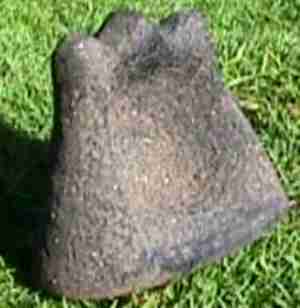
|
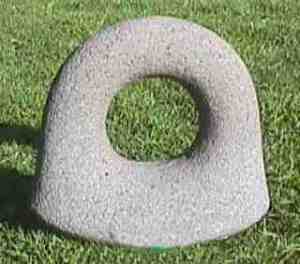

No comments:
Post a Comment